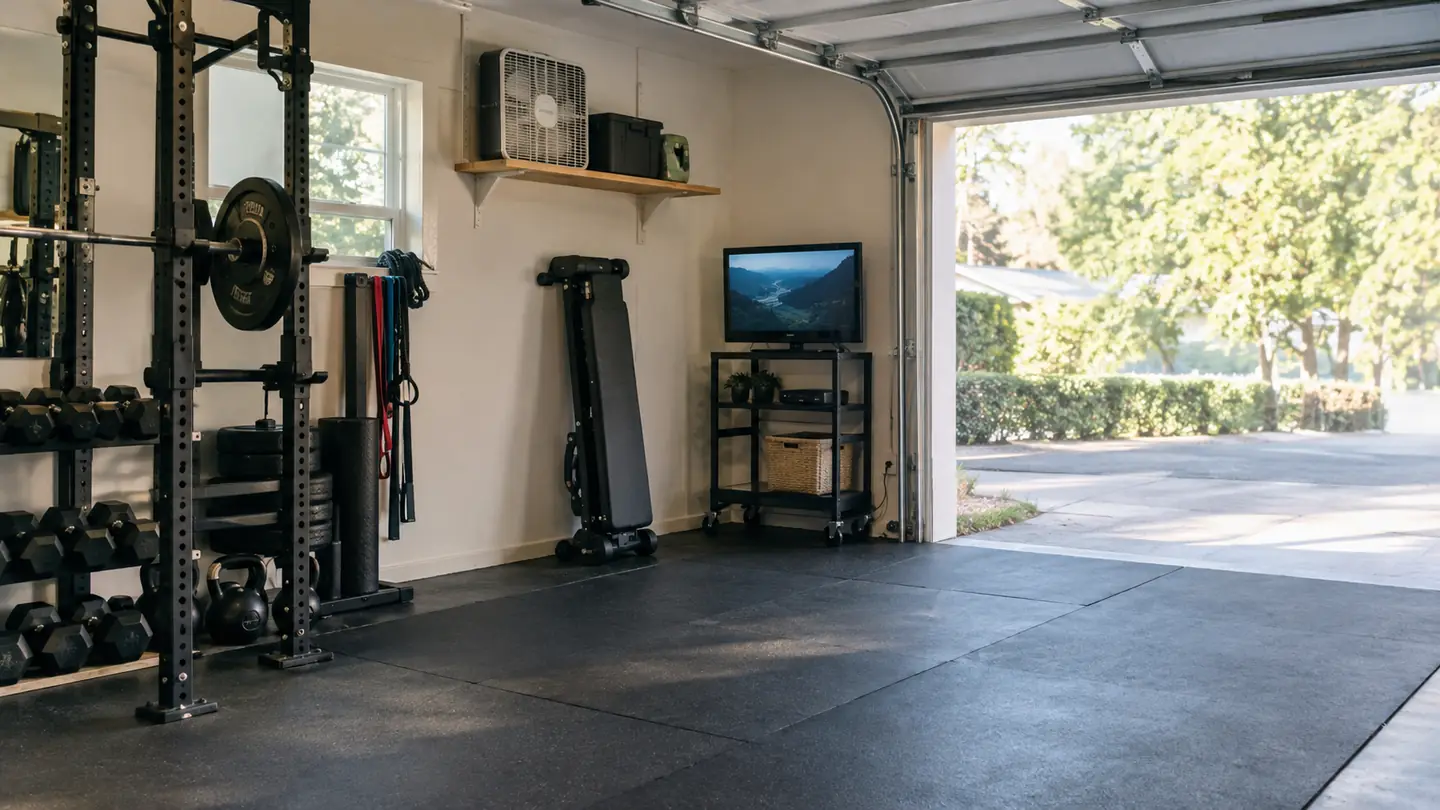
I train in one half of a two-car garage, on rubber stall mats, with a box fan and a small TV on a shelf. I am 51, I work in logistics, and my left knee has been cranky for years after too much pickup basketball. So when I say I have spent the last year using the FLYBIRD WB5 Adjustable Weight Bench most mornings before work, I mean I have tested it under the most practical conditions I know: early, tired, and with a joint that objects to certain movements.
I wanted a bench that would let me do incline dumbbell work, seated shoulder presses, and split squats without taking over the whole garage or requiring a forklift to move. The FLYBIRD bench has been that, with a few honest tradeoffs I have learned to live with. Here is what a year of daily use looks like.
The Quick Verdict
A rock-solid, space-efficient bench for dumbbell lifters and light barbell work. The adjustability is genuinely useful, the footprint is small, and it has not squeaked or wobbled in a year. It is not a power rack, and the seat is a touch narrow for bigger frames, but for a busy adult with a garage corner it is close to perfect.
Amazon Check Today's Price →A bench that takes up less room than a parking cone
If you are building a home gym in a spare corner, the FLYBIRD WB5 gives you a full range of incline positions without a permanent footprint. See today's price on Amazon.
Amazon Check Today's Price on Amazon →How I've Used It
My routine is simple. Three or four mornings a week, around 6:15 AM, I tip the bench up on its front edge and roll it from the wall to the middle of the mat. The whole setup takes maybe a minute, including grabbing the dumbbells off the shelf. I do three sets of incline dumbbell press with two 70 lb dumbbells, three sets of seated shoulder press with two 55s and the backrest upright, and some band work for the shoulders. If the knee is feeling okay, I add split squats with the bench behind me. Some mornings I only have time for two sets of everything, and the bench is not the reason. It is never the reason. On Saturdays I take a little more time and do a full circuit, usually with the bench set flat for rows and core work.
The bench lives folded up against the wall when I am not using it. That is the main reason I bought it. My side of the garage also holds a small shelf of dumbbells, a box fan, and a TV cart, and I still have room to park the car if we ever need to. The FLYBIRD folds into a tall, narrow shape that leans against the wall and stays there. It takes me less than ten seconds to fold it after a session, and I have gotten into the habit of doing that before I even drink my water. The garage stays walkable, and nothing has ever tipped over, even when I brush past it carrying the leaf blower. When friends come over and see it folded up, they usually ask where the bench is. That is the compliment that matters most.
Carmen, my wife, uses it too on the weekends, mostly for incline work and hip thrusts. She is shorter than me, so the seat and backrest adjustments get moved around a lot. In a year, the pins have not stuck, the ladder has not stripped, and nothing has loosened up. That matters when two people are adjusting it constantly. The first time she used it, I watched her change the backrest angle between sets without hesitating, and I remember thinking that if the adjustment were stiff or fiddly, she would have just picked one position and stayed there. Instead she changes it almost every set.
Build Quality and Stability
The first thing I checked was the wobble. I have used cheap benches at hotel gyms that feel like they are going to fold up under a heavy set, and I did not want that in my garage. The FLYBIRD WB5 does not have that problem. The frame is thick steel with a wide base, and the rubber feet grip the stall mat well. When I press a 200 lb dumbbell pair on the incline setting, the bench does not shift, rock, or squeak. I also did the sideways test, where you sit on the edge of the seat and lean to each side. A weaker bench will twist under that. This one stays square. I remember the exact set where I stopped worrying about it. It was a Saturday in August, my third set of incline presses, and I realized I had stopped checking the bench between reps. That is the quiet confidence test, and the FLYBIRD passed it.
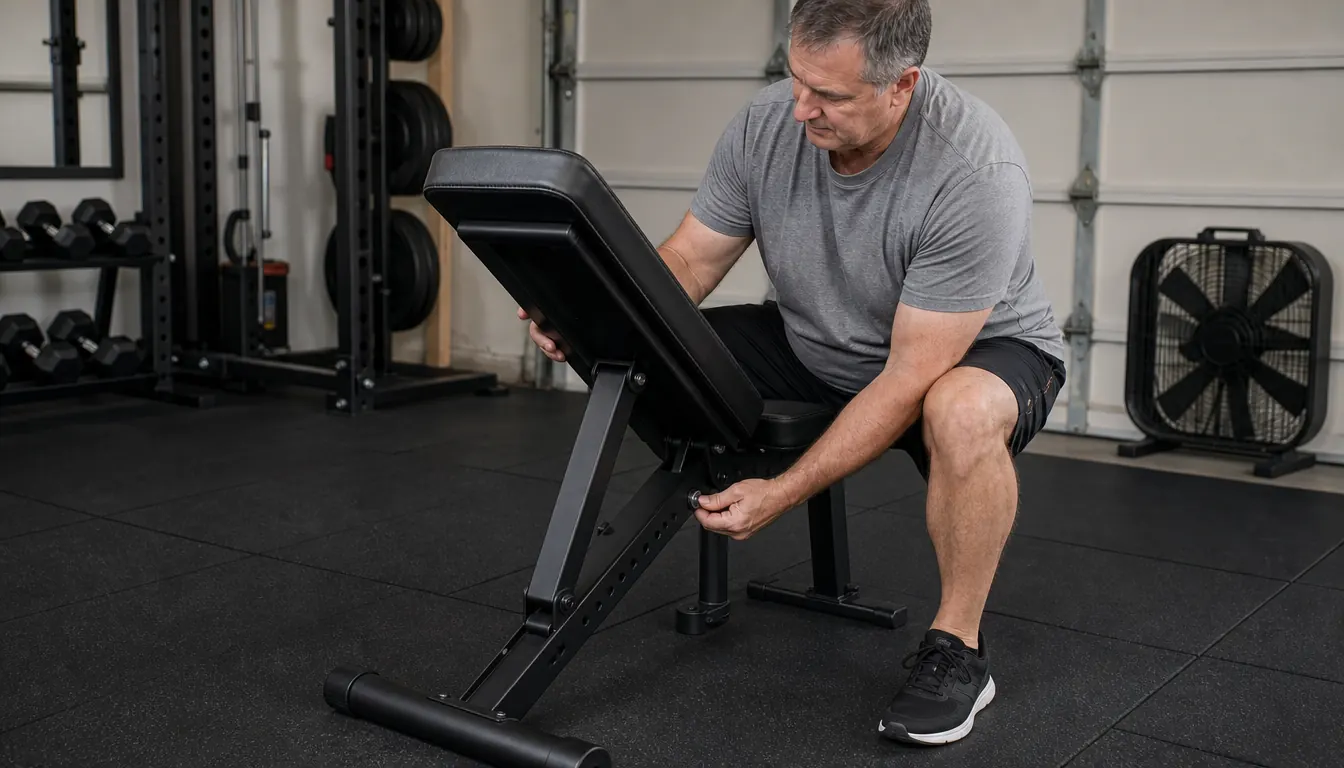
The 800 lb weight rating is overkill for most people, including me, but it tells you something about the materials. This is not a flimsy folding contraption. Assembly took about twenty minutes with a basic socket set, and every piece lined up the way it was supposed to. The welding is clean, the paint has not chipped where the adjustment pins slide, and the hinges have held up to being folded and unfolded hundreds of times. I checked the bolts after the first month out of habit, and again after six months. Nothing needed tightening. I have not touched a wrench since the day I put it together.
The one thing I would flag is the seat padding. It is firm, which is good for stability, but it is a little narrow. If you are a bigger person, you will notice the edges of the seat under your thighs during hip thrusts or upright work. I am not a small guy, and I notice it on longer sessions, usually around the forty-minute mark. It is not a dealbreaker, but it is a real detail that separates this from a competition bench. If FLYBIRD ever makes a version with a wider seat, it would be the one I would buy for the second garage we do not have. The vinyl has held up fine, which is more than I can say for the bench at the hotel gym I used on a work trip last spring.
Adjustability That Actually Gets Used
Most adjustable benches have about a dozen positions you fiddle with once and then ignore. The FLYBIRD is different because the ladder-style backrest adjustment is genuinely quick. You pull the pin, slide the backrest to the next notch, and let go. It takes two seconds, and you can do it between sets without breaking your rhythm. I know the difference because I had a cheaper bench before this one, with a single locking pin and a backrest that never felt quite locked. I returned it after two weeks and spent three months doing everything on the floor. That failed experiment is what made me willing to spend a little more on a bench with a proper ladder. The first week, I kept checking the pin after every rep, sure it would slip. It never did, and by the second week I stopped thinking about it entirely.
I use three positions regularly: flat for split squats and core work, a middle incline for dumbbell press, and fully upright for seated shoulder press. The seat also adjusts forward and back, which is not something every bench in this price range offers. That range is what makes it a complete home gym station instead of just a place to lie down. The middle incline is the position I use the most, and it is the one that sold me on the bench. It sits at a comfortable angle for pressing without putting my shoulders in a bad spot, and I can find it blind now, just by feel of the notches.
The decline position is there too, and I use it for decline sit-ups. It works, but it is the least convenient position to set up because you have to pull the leg lock out and hook your feet under it. It is not hard, just a little more fiddly than the rest. For the one or two times a week I do decline work, it is fine. If I could trade the decline for a wider seat, I would, but I would not trade the ladder adjustment for anything. One thing I will say for the decline setup: once you have done it a few times, it takes about ten seconds. The first time took me two minutes and a lot of muttering.
The Knee Factor: Low-Impact Work Made Easier
This is where the bench earns its keep for me. My left knee does not like deep loaded squats anymore, so I have shifted most of my lower body work to split squats and step-ups. A sturdy bench at the right height is essential for that, and the FLYBIRD is solid enough to hold my full weight while I brace against it. I set the backrest to the second-lowest position for split squats, which puts my rear foot at a height that does not pull on the knee. On bad mornings, when the knee is stiff, I skip the split squats entirely and just use the bench for step-ups, which are gentler. Having both options on the same piece of gear is what keeps me training on the days I would otherwise skip.
The incline setting also helps with shoulder issues. Pressing at a slight incline rather than flat takes some of the stress off the shoulder joint, and the ability to find the exact angle that feels right is something I use every session. It turns a piece of gear into a piece of rehabilitation equipment.
I am not a fitness influencer and I am not promising anyone results. I am just a guy with a sore knee who needs to move some weight without making things worse. The FLYBIRD bench has made that possible, consistently, for over a year. That is the whole review.
Space, Noise, and Daily Life
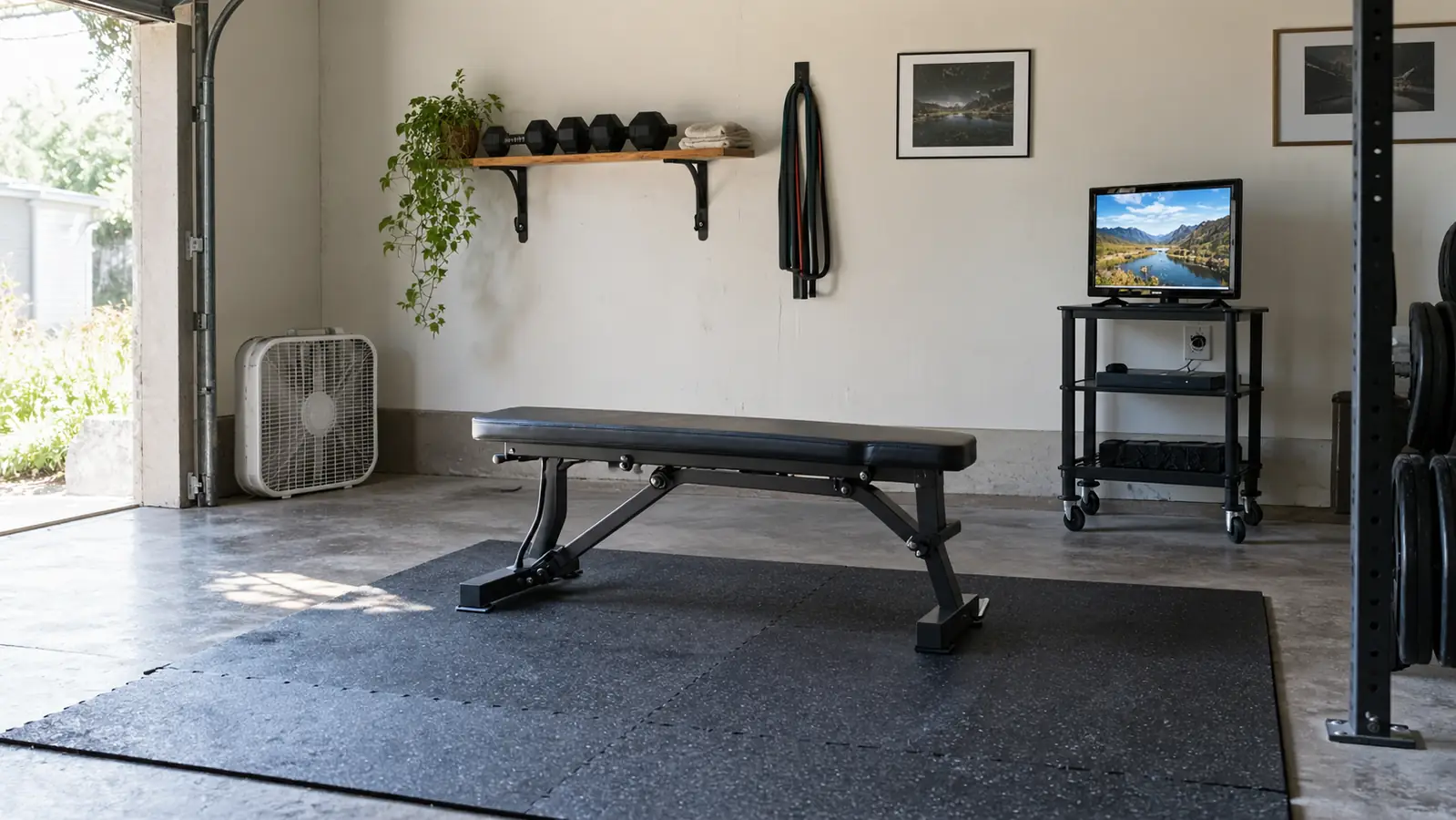
The fold-up feature is the reason I bought this bench, and it has delivered. It folds down to a flat profile that leans against the wall, and it takes up maybe a square foot of floor space. Unfolded, it is a little under five feet long and narrow enough that I can walk past it with the car door open. It weighs around 60 lb, so it is not something you want to haul up and down stairs every day, but on a single floor it is easy to move around. I have moved it from the wall to the middle of the mat so many times that I do not think about it anymore. The folded footprint matters more than I expected. The first time I leaned it against the wall, I walked to the other side of the garage and looked back at it, just to confirm the floor was clear. It was.
Noise is another thing I watch for in a garage gym. The FLYBIRD has been quiet. The rubber feet prevent it from sliding on the mat, and the metal-on-metal contact points are well fitted, so there is no rattling or squeaking. At 6:15 in the morning, that matters a lot. On the coldest morning last winter, I expected the pins to stick or the frame to creak in the cold. Neither happened. The pins slid the same as they do in July, and the bench was silent under a full set. The rubber feet also mean the bench does not slide when I brace my feet against the floor for split squats. On bare concrete, a bench can wander a quarter inch with every rep. On the stall mat with these feet, it stays put.
It is also easy to clean. Sweat wipes off the vinyl, dust does not get into the adjustment mechanism, and the frame has not rusted in the humid San Jose summers. The whole bench has needed exactly zero maintenance in a year, which is more than I can say for the TV cart, the box fan, or the garage door opener.
What I Liked
- Rock-solid frame with zero wobble under heavy dumbbell work
- Quick ladder-style adjustment that works between sets
- Small folded footprint, ideal for a half-garage gym
- Multiple angles from flat to decline, seat adjusts too
- Held up for a year with daily use and no maintenance
Where It Falls Short
- Seat is a little narrow for larger frames
- Heavy to move around, not ideal for carrying upstairs
- Decline position setup is fiddly with the leg lock
- No safety rack for heavy barbell bench press work
I have had the FLYBIRD in my garage for over a year, and it still does not wobble, squeak, or shift when I am pressing 200 lb dumbbells.
Who This Is For
This bench is for the busy adult who trains at home in a limited space. If you have one corner of a garage or a spare bedroom, and you want a bench that can handle dumbbell work, bodyweight movements, and light barbell use, the FLYBIRD is a very strong choice. It gives you a full range of motion and angles without permanently eating your floor space. If your schedule looks like mine, thirty minutes before work, three or four days a week, you want gear that does not add friction to the morning. The FLYBIRD adds none.
It is also for people who value quiet, low-maintenance gear. If you train early in the morning, the last thing you want is a bench that squeaks with every rep. This one does not. And if you have joints that need a little extra consideration, the adjustable backrest makes it easy to find a position that works for you.
Who Should Skip It
If you are benching 300 lb or more with a barbell, you should skip this bench. It is not designed to be a power rack, and without safety arms, a failed rep means dumping the bar. For heavy barbell work, you want a dedicated bench with spotter arms or a full power rack, not a foldable bench.
If you need a bench that folds in half and fits in a closet, this is also not it. It folds flat against a wall, but it is a solid, heavy piece of equipment. And if you want a plush, competition-style seat, the firm padding here will feel too sparse. This is a practical tool, not a luxury item.
Still using the floor and a stack of towels?
If you have been meaning to build a proper home setup but keep putting it off because of space, the FLYBIRD WB5 is the bench that solves the storage problem. Check the current price on Amazon.
Amazon Check Today's Price on Amazon →