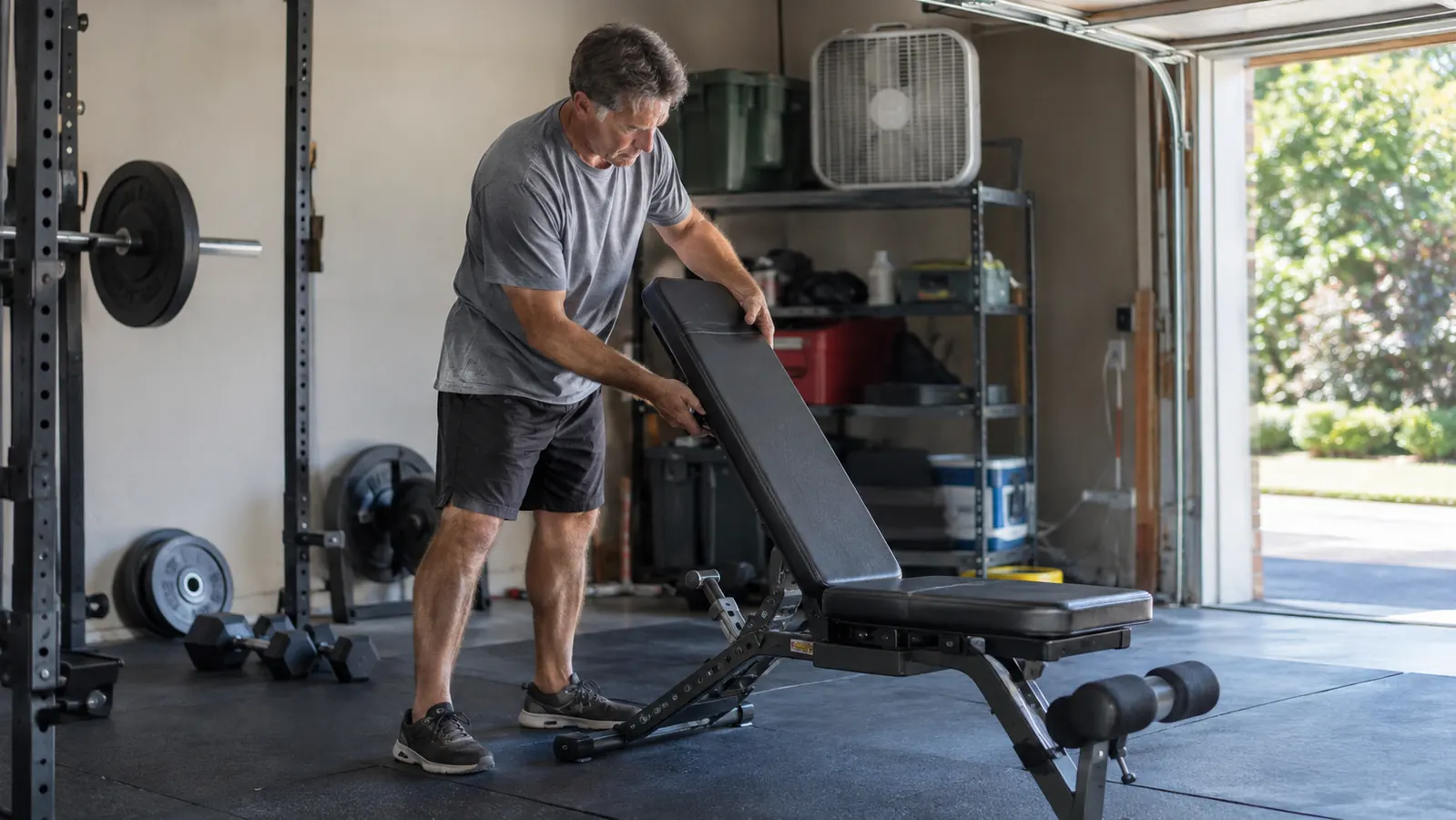
Both benches fold flat. Both adjust to a bunch of angles. Both show up in the same search results when you type 'adjustable weight bench' into Amazon, and both have thousands of reviews behind them. So how do you pick? I train three or four mornings a week in my garage on the FLYBIRD WB5, and I put a YOLEO bench in the same spot for a few weeks to see what you actually give up going either way. The short answer is that the FLYBIRD wins for me, but not because the YOLEO is a bad bench. It's because the two are built for different priorities, and once you know which one you are, the choice gets easy.
Here's the one-sentence version: the FLYBIRD is the bench you buy when you plan to lift heavy, want the thing to feel solid under a loaded barbell, and have a corner of the garage to give up. The YOLEO is the bench you buy when you want something lighter, cheaper, and easier to tuck into a closet, and your workouts mostly stay at moderate weights. Neither is a bad call. They just answer different questions.
FLYBIRD vs YOLEO: The Comparison
| FLYBIRD WB5 | YOLEO Bench | |
|---|---|---|
| Weight capacity | Rated to 800 lb, so it handles heavy pressing without flex | Most YOLEO folding models are rated lower, typically around 600 lb |
| Stability | Wide base and heavier frame; no wobble under a loaded barbell | Feels fine for dumbbell work, but lighter overall |
| Adjustability | Back pad moves through more angles, including decline positions | Covers the basics: flat, incline, and a few stops between |
| Weight | Heavier, which helps it stay put but makes it harder to drag around | Noticeably lighter, easy to slide into a closet after a set |
| Price | More expensive up front | Usually the cheaper option, especially during sales |
| Folded footprint | Folds down to lean against a wall, still takes up some floor space | Folds smaller and stores more easily in tight spaces |
| Assembly | About 30 minutes with the included wrenches | Similar process, a bit quicker because the parts are lighter |
| Warranty | Covered for defects, and FLYBIRD answers support emails | Covered for defects, though the process varies by seller |
| Best for | Home lifters who press heavy and want a bench that feels permanent | Lighter training, small apartments, or a bench that gets stored between sessions |
Where the FLYBIRD Wins
The FLYBIRD's biggest advantage is that it does not move. The frame is built from heavier steel, and once the bench is unfolded and the back pad is locked into place, you can set up for a bench press and not think about the bench at all. That sounds like a small thing, but it's the difference between focusing on the lift and focusing on the wobble. On a bad bench, every rep has a little flex in it, and your body spends part of the set compensating. On the FLYBIRD, the bench disappears.
The other thing I like is the range of positions. The back pad adjusts through a wide sweep, including decline, which matters for me because my left knee is cranky and I do a lot of work that keeps my feet planted. Being able to drop the bench to a slight decline for press variations takes pressure off my lower back. The leg hold-down roller locks in place with one hand, and the whole thing feels like it was designed by someone who actually trains. When Carmen uses it for her lighter sessions, she can adjust it without wrestling with the mechanism. I count eight back pad positions on the FLYBIRD, from flat to a steep upright angle, and I use most of them across a normal week. The Saturday I noticed it most, I went from flat bench to a 45 degree incline for dumbbell work and then down to a slight decline for knee-friendly presses, all without getting off the bench. The pin slides out, the pad clicks into the new stop, and the lock feels positive every time.
Where the YOLEO Wins
The YOLEO wins on the two things that matter most when space is tight: weight and price. It's lighter, so you can drag it from a storage closet to the middle of a living room, do your set, and put it back without feeling like you just did an extra workout. It's also cheaper up front, which is a real consideration if you're not sure yet whether the bench will actually get used. For someone starting out, or someone who lives in an apartment, that lower commitment is a genuine advantage, not a marketing line.
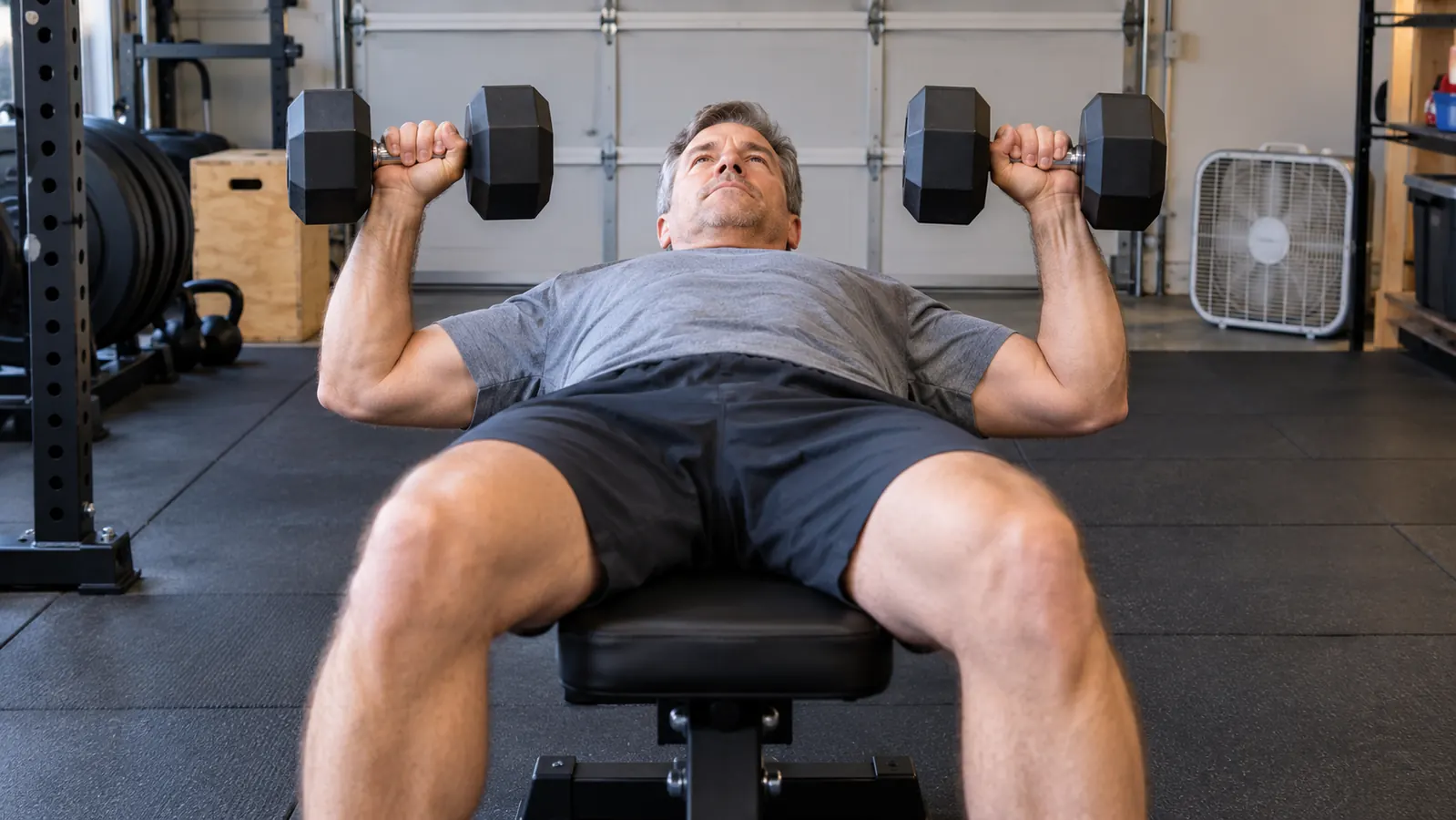
The tradeoff shows up under load. At moderate weights, the YOLEO feels fine. I did weeks of dumbbell work on it and never once felt unsafe. But when I loaded a barbell toward the top of what I can press these days, the difference was obvious. The session that settled it was a Thursday morning. I had 185 lb on the bar for flat presses, which is not a big number for a lot of lifters, but it is close to my working max. On the YOLEO, the frame shifted when I unracked, and the back pad gave a small but real flex on the first rep. I finished the set, then dropped the weight for the next one. Two days later I ran the same session on the FLYBIRD, same weight, and the bench did not move a centimeter. That is the whole comparison in one story.
How I Tested Them
I didn't do anything scientific. I put the FLYBIRD in my garage for a few weeks, then swapped in the YOLEO for the same stretch, then went back to the FLYBIRD. Same exercises each time: flat bench press, incline dumbbell work, seated shoulder presses, and some decline press variations that are easier on my left knee. I also timed how long each bench took to set up, fold, and move, because that's the part that decides whether a bench actually gets used at six in the morning.
The setup difference was small. Both benches took about half an hour to assemble with the included wrenches, and the instructions for both were pictures, which is what you want. I put the YOLEO together first, on a Sunday afternoon in about 25 minutes. The FLYBIRD took closer to 35 because the frame pieces are heavier and the bolts need more turns, but every hole lined up, which is more than I can say for some flat-pack furniture in this house. Both boxes include the right tools, so I did not have to hunt for an Allen key before my first session. The FLYBIRD's parts were heavier, which made assembly slightly more awkward, but the finished bench felt more planted. The YOLEO went together a little faster because the pieces were lighter. Neither needed a second person, though I'd recommend having a hand nearby when you flip the FLYBIRD upright.
The bench that stayed in my garage
After a month of switching between the two, the FLYBIRD WB5 is the one that earned the permanent spot. It's solid under a loaded bar, adjusts in seconds, and folds down when I need the floor space. Check today's price on Amazon and see if it fits your setup.
Amazon Check Today's Price on Amazon →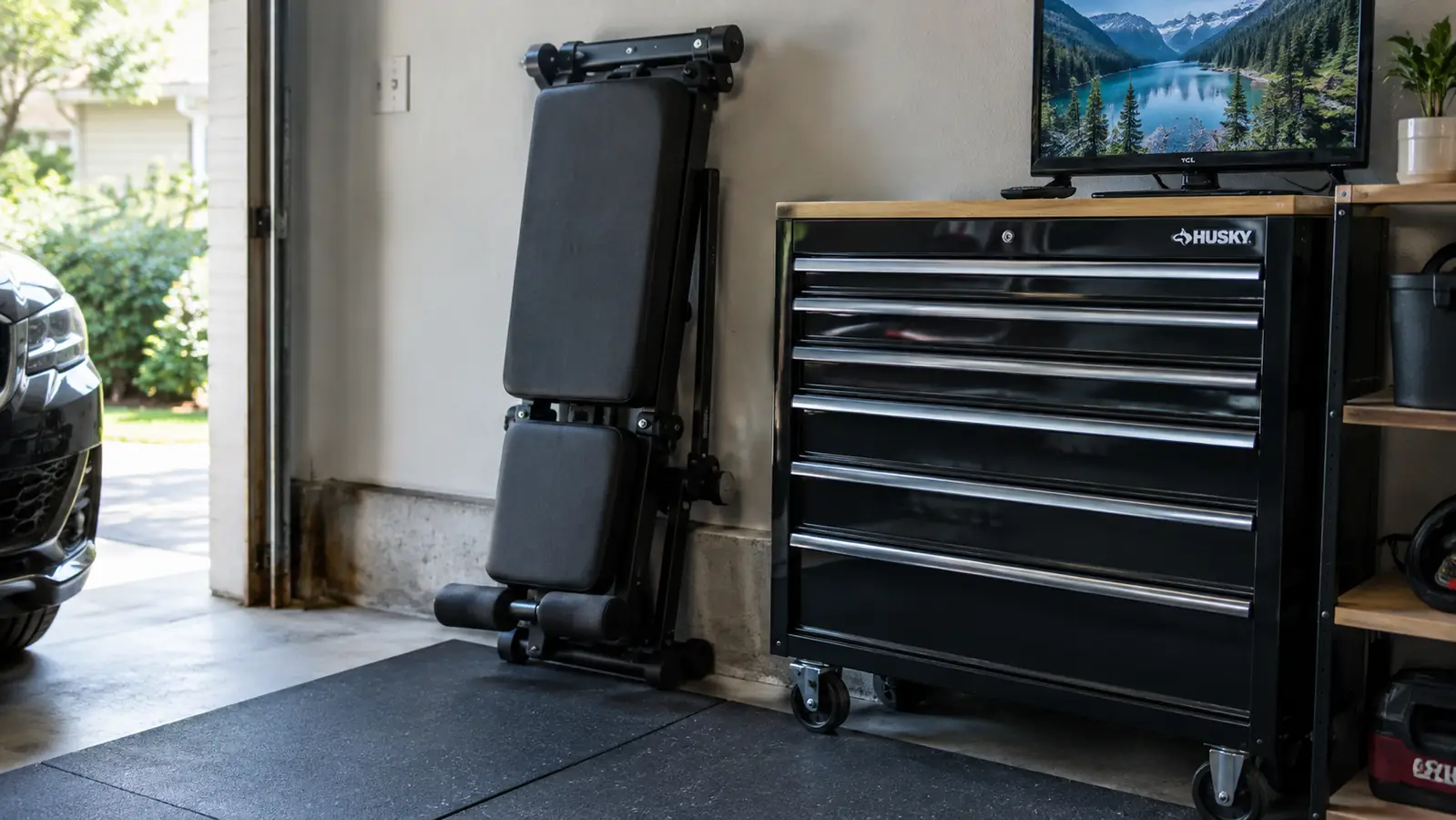
What Both Benches Get Right
Start with the obvious: both fold. That's the whole reason you're comparing folding benches in the first place, and both do it well. The FLYBIRD folds down to a flat profile you can lean against a wall, and the YOLEO folds even smaller. Both have a locking mechanism that keeps the frame from folding up mid-set, which is the one thing a folding bench absolutely has to get right. I checked that on both benches by pressing hard at a few different angles, and neither one gave me a scare. I also folded and unfolded each one about a dozen times over the month, and neither lock showed any sign of loosening. That matters, because a lock that wears out is what turns a folding bench into a hazard.
Both also get the basics of adjustability right. You can set the back pad to flat, a couple of incline positions, and a decline on both, and both use a pull-pin system that locks positively. The difference is in the number of positions and how solid the lock feels. The FLYBIRD has more stops and the mechanism feels more substantial. The YOLEO has fewer stops, but the ones it has are fine. If you only ever use flat and one incline, you won't feel shortchanged by either.
The Part Nobody Talks About
Folding benches sound like a space-saving dream, and then you live with one. The honest truth is that a folded bench still takes up a noticeable slice of a room. I measured both during the month I had them. The FLYBIRD folds to about 52 inches tall, and leaning against the garage wall it stays below the shelf that holds the small TV, but the folded base still claims a solid chunk of floor. The YOLEO is a few inches shorter and noticeably thinner, so it tucks beside the tool cabinet without sticking into the walkway. The FLYBIRD still sticks out far enough that I have to walk around it when I'm pulling out the car. The YOLEO is easier in that regard, but it is still a bench leaning against a wall. If you're picturing a bench that vanishes into a closet, the YOLEO gets closer to that. The FLYBIRD is more like a permanent resident.
The other thing nobody mentions is that heavier is not automatically worse. A lighter bench is easier to move, but it's also easier to slide when you're doing something like a heavy set of dumbbell rows or a movement that lands on the edge of the pad. The FLYBIRD's extra weight keeps it where you put it. The YOLEO will stay put for normal training, but I found myself checking it more often during aggressive movements. For my style of training, which is steady and controlled, both were fine. For someone who moves more explosively, the extra heft of the FLYBIRD is a quiet advantage.
What I'd Change About Both
No bench is perfect, and I'd be lying if I said either of these is the last bench you'll ever want. On the FLYBIRD, the thing I'd change is the weight. It's heavy enough that moving it around the garage is a two-hand job, and if you live on a second floor, you're going to curse it on the way up the stairs. The tradeoff is stability, and I'll take the stability, but I want to be honest about what it costs. On the YOLEO, I'd change the lock mechanism. It works fine, but it doesn't feel as positive as the FLYBIRD's, and that little bit of play adds up over a year of sessions.
The other thing I'd change on both is the pad. The FLYBIRD's pad is firm and supportive, which is what you want for heavy pressing, but it's not plush. If you do long sessions of leg work where you're lying on the bench for a while, you'll feel it. The YOLEO's pad is a bit softer, which is comfortable for lighter work but not ideal under a loaded barbell. Neither is bad. They're just tuned for different purposes, and now that I've lived with both, I understand why each one made the choice it did.
Who Should Buy Which
Buy the FLYBIRD if you lift heavy, if you have a corner of a garage or basement you can give up, and if you'd rather buy one bench that lasts than save money on a bench you'll want to replace. Buy the YOLEO if your training is mostly dumbbells and moderate barbell work, if you need to store the bench between sessions, or if you're still figuring out whether home workouts are going to stick. There is no wrong answer here. There's just the honest one, which is that these benches serve different people.
For me, the deciding factor was the 800 lb rating and the way the bench felt under a loaded bar. My knee keeps me away from deep squats, so bench work and seated pressing carry more of my training. A bench that wobbles makes every one of those lifts worse. I also train early in the morning, before work, and the last thing I want at six a.m. is to fight a finicky adjustment mechanism. The FLYBIRD's locks are simple and obvious, which matters more than it sounds like it should.
If you're still on the fence, think about the room, not the reviews. Both benches have plenty of happy owners. The question is whether you'll be happier with a bench that stores easily and costs less, or a bench that feels like a permanent piece of the gym. For me, that answer was the FLYBIRD. For a lot of people, the YOLEO is the smarter buy. Both are fine. Now you know which one you are.
Still weighing the two?
If your training looks like mine, the FLYBIRD WB5 is the one I'd put my money on. It's the bench that stays put, adjusts without fuss, and folds down when the garage needs to be a garage again. See what it's going for on Amazon today.
Amazon Check Today's Price on Amazon →