
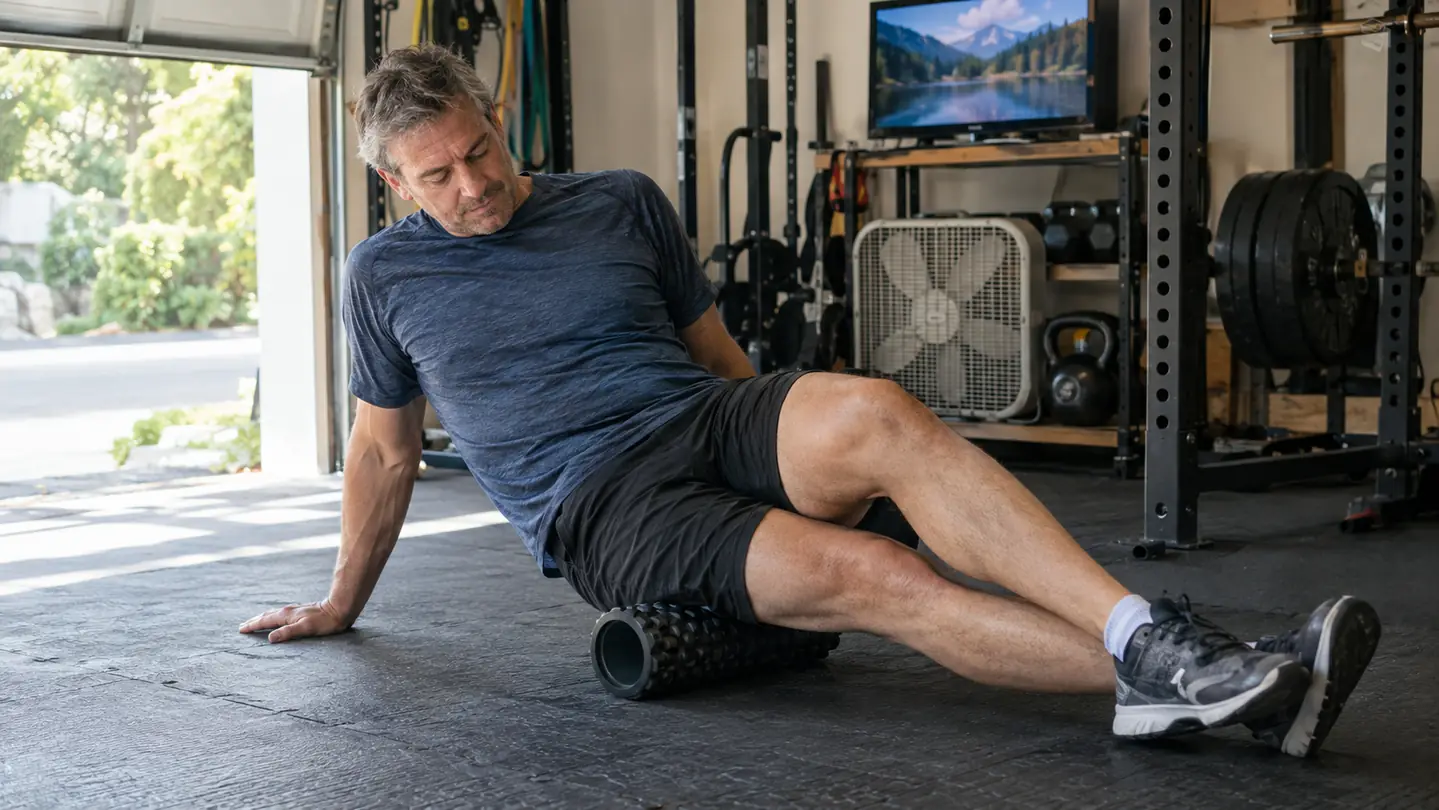
My left knee has been cranky since my pickup basketball days, and at 51 I have learned to treat recovery like part of the workout, not an optional extra. So when I started seeing the TriggerPoint GRID foam roller show up in every warmup video and every post-workout routine, I figured it was worth a real test. I have now used the 13 inch GRID for months, most mornings before work in one half of my two-car garage, and I have opinions that go beyond what the marketing photos show.
The short version: it earns its spot on the garage floor. The longer version involves a few tradeoffs that nobody mentions in the product description, and those are the ones I want to talk about.
The Quick Verdict
A well-built, easy-to-clean roller that does the job for daily recovery work, with a firmness that takes a few sessions to get used to.
Amazon Check Today's Price →The roller I reach for most mornings
After months of use, the TriggerPoint GRID is the first thing I grab when my legs feel tight. Check today's price on Amazon and see if it fits your routine.
Amazon Check Today's Price on Amazon →How I've Used It
My routine is not fancy. Three or four mornings a week, before work, I spend 30 to 40 minutes in the garage. I warm up, do my main work, and then I spend about ten minutes on the floor with the GRID. I roll my calves, my hamstrings, my quads, and the outside of my left leg, which is where my knee trouble likes to hide. My wife Carmen uses it too, mostly for her back after she spends the day on her feet.
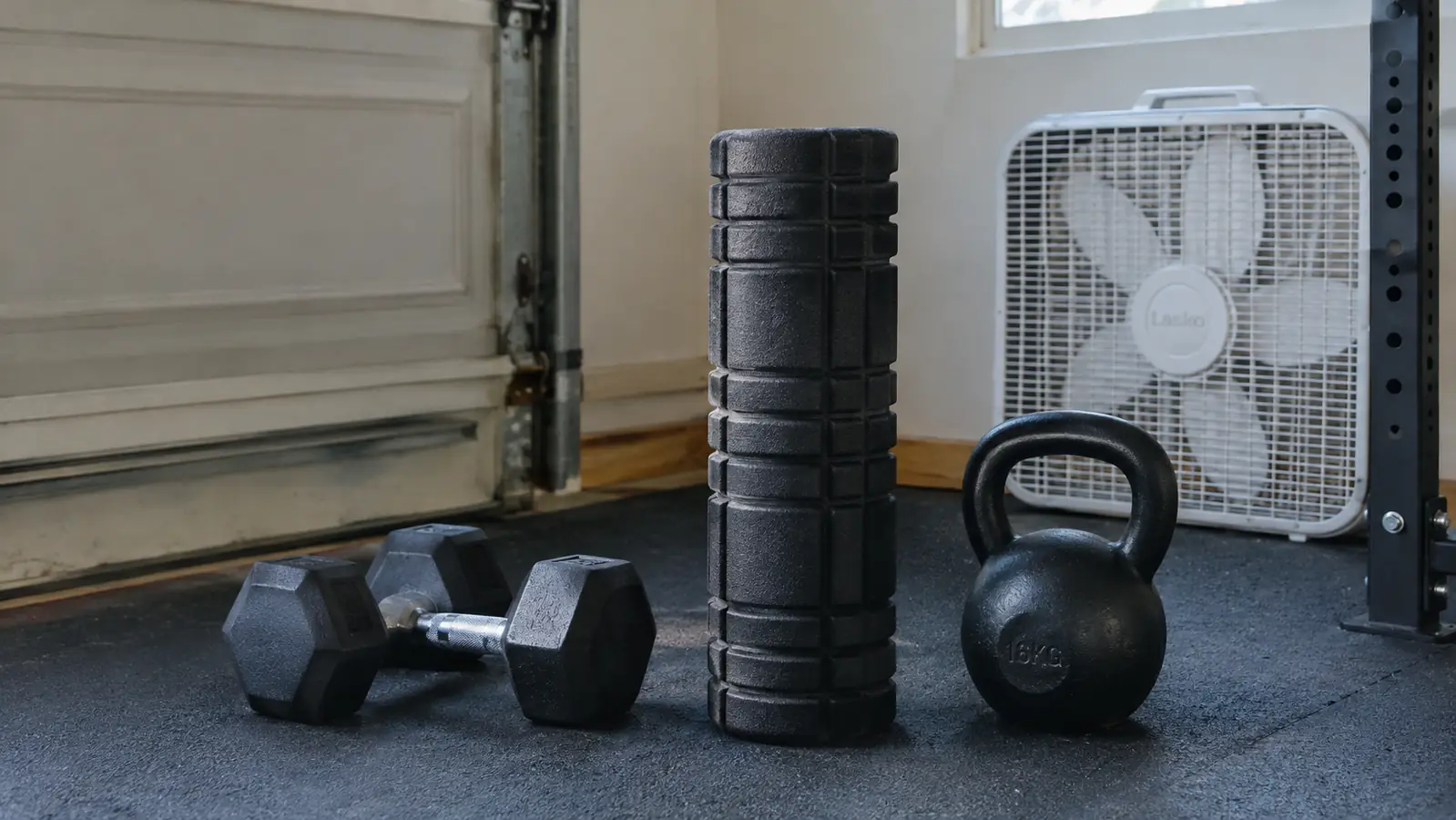
The 13 inch size was a deliberate choice. I did not want a full-length roller because it would live against the wall and I knew I would not drag it out. The shorter GRID sits in a corner next to my dumbbells, and because it is right there, I actually use it. That sounds like a small thing, but it is the whole ballgame with recovery gear.
I have also used it after Saturday morning sessions, when I have more time and can be more thorough. On those days I roll for closer to 15 minutes and I pay attention to the spots that were tight all week. The GRID has a firm surface, and the raised pattern takes a couple of sessions to get used to, but once you do, it feels like it is actually getting into the tissue instead of just pressing on it.
The routine got its real test one Tuesday in February. I had pushed through a leg session that my left knee did not appreciate, and by the time I finished my coffee I could feel the familiar tightness running down the outside of my leg. I skipped the usual cool-down and went straight to the floor with the GRID. Ten minutes of slow work on the calves, the hamstrings, and the outside of the quad, and the difference was noticeable enough that the roller moved from experiment to permanent routine.
I keep the GRID in the same spot every night, leaning against the wall next to the dumbbell rack, because I have learned that the tools I can see are the tools I use. It is 13 inches long and weighs about a pound and a half, and it takes up less space than a pair of shoes. When Carmen wants it for her back, she grabs it and brings it back before I am out of the shower. That sounds like a small detail, but a recovery tool that has to be dug out of a pile is a recovery tool that stays in the pile.
What the Multi-Density Surface Actually Does
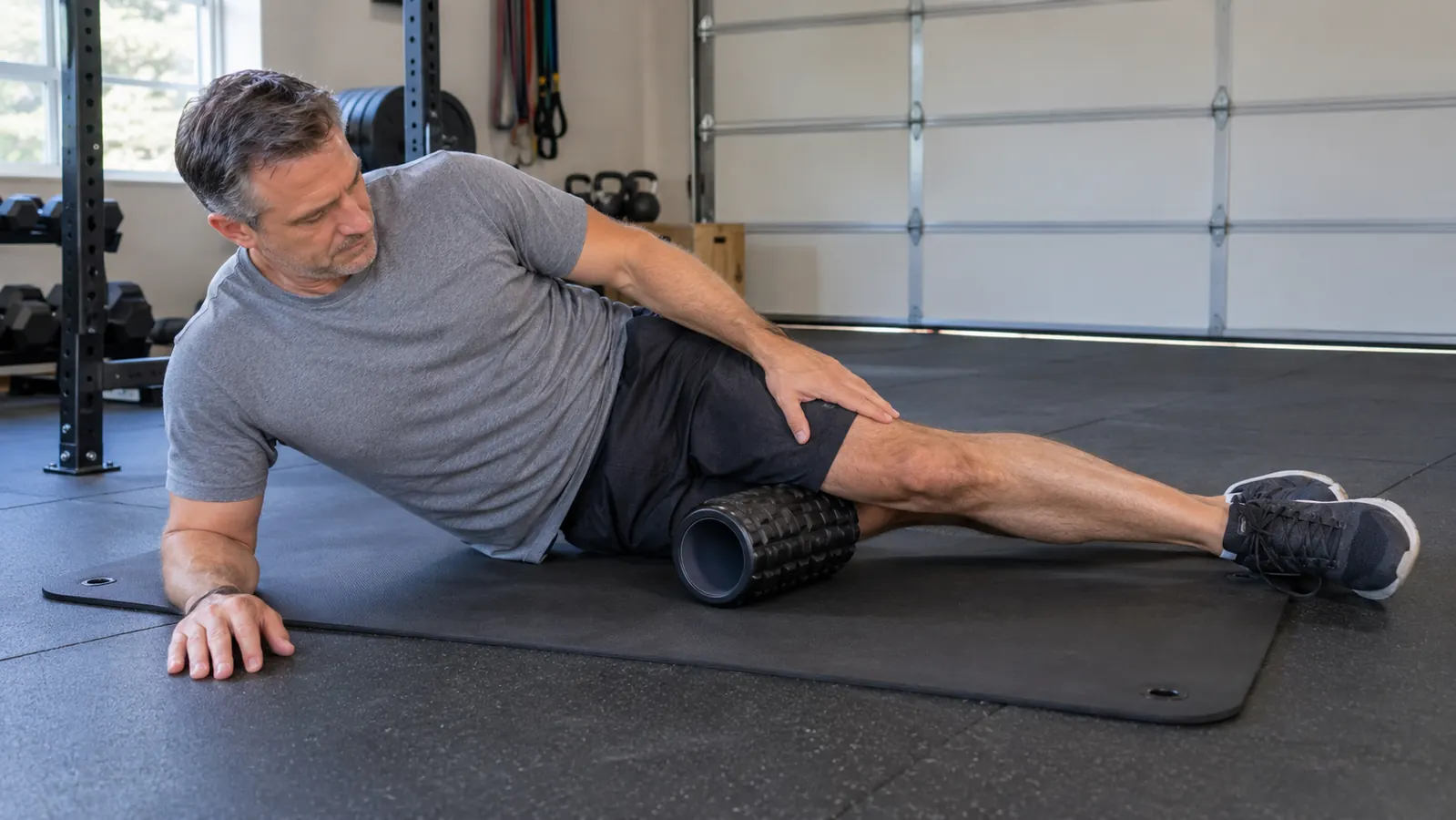
The GRID's surface is not smooth. It has a pattern of raised nodes in different densities, and the idea is that the firmer areas work deeper while the softer areas let you ease in. I was skeptical of that claim at first, because every foam roller on the market says something similar. But after months of use, I can tell the difference between the GRID and a plain foam cylinder.
The raised pattern gives you a more targeted feel. When I roll my calf after a hard session, I can find the knot and work it with the firmer part of the roller, then move to the softer section to let the muscle relax. It is not magic, and it does not replace a massage therapist, but it is a noticeable step up from a smooth roller that just squishes flat under your weight.
One honest note: the surface is firm. If you are new to foam rolling, or if you have not rolled in a while, the first few sessions will be uncomfortable. I tell people to start with your body weight on the softer areas and spend less time on each spot. Within a week or two, the discomfort becomes a productive kind of pressure, and you will find yourself reaching for it on purpose.
Before the GRID, I owned a smooth foam roller from a big-box store. It was fine for the first month, and then it developed a permanent squish in the middle, which meant my body weight just pushed it flat and I might as well have been lying on the floor. That roller now lives in a closet, and it is the reason I was willing to pay more for something with real structure. The GRID's surface is molded, not soft foam, and it does not give up under weight the way that cheap cylinder did.
The density pattern also matters more than I expected. The firmer sections let me bear down on a specific knot, and the softer sections give me a place to ease off when the pressure gets to be too much. One Sunday in March, after a long Saturday session, I found a knot in my right calf that had been bothering me for the better part of a week. Twenty minutes with the GRID, alternating the firm and soft areas, and it released enough that I could walk down the stairs without wincing. That was the moment I stopped thinking of the roller as a gadget and started thinking of it as a tool.
How It Holds Up Over Months of Use
Durability was my biggest question when I bought it. I have seen cheap rollers lose their shape in a few weeks, and I did not want to replace this thing every couple of months. After months of daily use, the GRID still looks and feels like the day I opened the box. The surface has not cracked, the core has not softened, and the end caps have not come loose.
I am not gentle with it. It lives on a rubber stall mat in a garage that gets hot in the summer and cold in the winter. It has been knocked over by dumbbells, kicked out of the way, and left on the floor overnight more times than I can count. It still rolls smoothly and quietly, with no wobble and no squeak.
Cleaning is simple. I wipe it down with a damp cloth and a little soap every couple of weeks, and it looks as good as new. The surface does not absorb sweat or smell, which is more than I can say for some fabric-covered rollers I have tried.
I bought my TriggerPoint GRID in early January, which means it has been through a full cycle of San Jose weather. The garage has hit the high 90s in the summer and dropped into the low 40s at night in the winter. The roller has sat through both, and the surface has not softened in the heat or turned brittle in the cold. That matters more than it sounds like, because I have seen cheap plastic tools crack after a single hot summer.
It has also taken some direct hits. In March I knocked it off the shelf while reaching for a dumbbell, and it bounced off the concrete floor before I could catch it. A few weeks later I dropped a 35 pound plate on the end cap by accident. There is a small scuff on the cap from that one, but the roller still spins true, no wobble, no cracked seam. I will not call it indestructible, because I have only owned it for months, but it has survived everything my garage has thrown at it so far.
Months of daily use, a hot summer, a cold winter, and one dropped 35 pound plate later, the GRID still rolls like the day I opened the box.
Where It Shines and Where It Falls Short
The GRID shines for daily maintenance. If you are the kind of person who will actually roll for five to ten minutes a few times a week, this roller will do everything you need. It is firm enough to work, comfortable enough to use, and small enough to keep within reach. For my money, that combination is what makes a recovery tool worth owning.
It falls short if you want a deep, aggressive massage. The 13 inch GRID is not a torture device, and it is not meant to be. If you have a specific injury or a chronically tight area that needs serious pressure, you will want a denser tool or a professional. I use the GRID for maintenance, and I accept that it is not going to fix a problem that needs a specialist.
The 13 inch length is also a tradeoff. It is perfect for calves, hamstrings, quads, and the outside of the leg. It is less useful for rolling your entire back, where a longer roller gives you more stability. I knew that when I bought it, and I chose the shorter version because I knew I would actually use it. If you want one roller to do everything, the longer GRID is worth a look.
The best example I have is from a Thursday in April. I had spent the previous day on my feet at work, unloading a truck that showed up two hours late, and my left leg was tight from the knee down by the time I got home. The next morning, before my workout, I spent twelve minutes on the floor with the GRID, working the outside of the calf and the quad. I did my session, and the leg felt like it belonged to me again by the time I was done. That is the real use case for this roller: it takes a tight morning and makes it a normal one.
One more honest note: the GRID does not fix my knee. It loosens the muscles around it, which takes pressure off the joint, but the ache that comes from years of basketball is still there on some mornings. I have learned to treat the roller as part of the solution, not the whole solution. On days when the knee is genuinely angry, I skip the heavy stuff, roll the surrounding muscles, and give it a day off. That combination has been more useful than any single tool I own.
What I Liked
- Firm, multi-density surface that actually gets into tight tissue
- Holds its shape after months of daily use in a hot and cold garage
- Easy to clean with a damp cloth, no fabric to absorb sweat
- 13 inch size is easy to store and quick to grab
- Quiet and stable on a rubber mat, no wobble or squeak
Where It Falls Short
- Firm surface is uncomfortable for the first few sessions
- 13 inch length is not ideal for full-back rolling
- Not aggressive enough for people who want a very deep massage
- Costs more than a basic smooth foam roller
Who This Is For
This roller is for the person who trains at home, has limited time, and wants a recovery tool that actually gets used. If you are in your forties or fifties, if your knees or hips complain after a hard week, and if you want something that lives within arm's reach and does its job without fuss, the TriggerPoint GRID is a solid choice. It is also a good pick if you are new to foam rolling and want a quality tool that will last while you figure out your routine.
If you have a specific problem area, like I do with the outside of my left leg, the GRID is easy to aim. You can lean into the firm sections to work one spot, then shift your weight to let the muscle recover. It rewards consistency more than effort. Ten minutes a few times a week has done more for my knee than the occasional hour-long session I used to do with the old smooth roller, because I actually stick with the shorter routine.
Who Should Skip It
Skip it if you want a deep, aggressive massage tool or if you have a specific injury that needs professional treatment. Skip it if you only want to roll your back, because the 13 inch length will leave you wanting more. And if you are on a tight budget and just want to try foam rolling for the first time, a basic smooth roller will tell you whether the practice is for you. The GRID is a step up in quality, and it costs more, so it makes sense when you know you will use it.
I would also tell you to skip it if you are the kind of person who buys gear and lets it sit. There is nothing wrong with that, I have a closet full of equipment that proves I have done it myself, but the GRID is a tool you have to use. It does not work sitting against the wall. If you are not going to spend ten minutes on the floor a few times a week, a cheaper roller will disappoint you just as thoroughly.
Months later, it is still the first thing I grab
The TriggerPoint GRID has earned its corner of my garage. If you want a recovery tool that holds up and actually gets used, check today's price on Amazon.
Amazon Check Today's Price on Amazon →