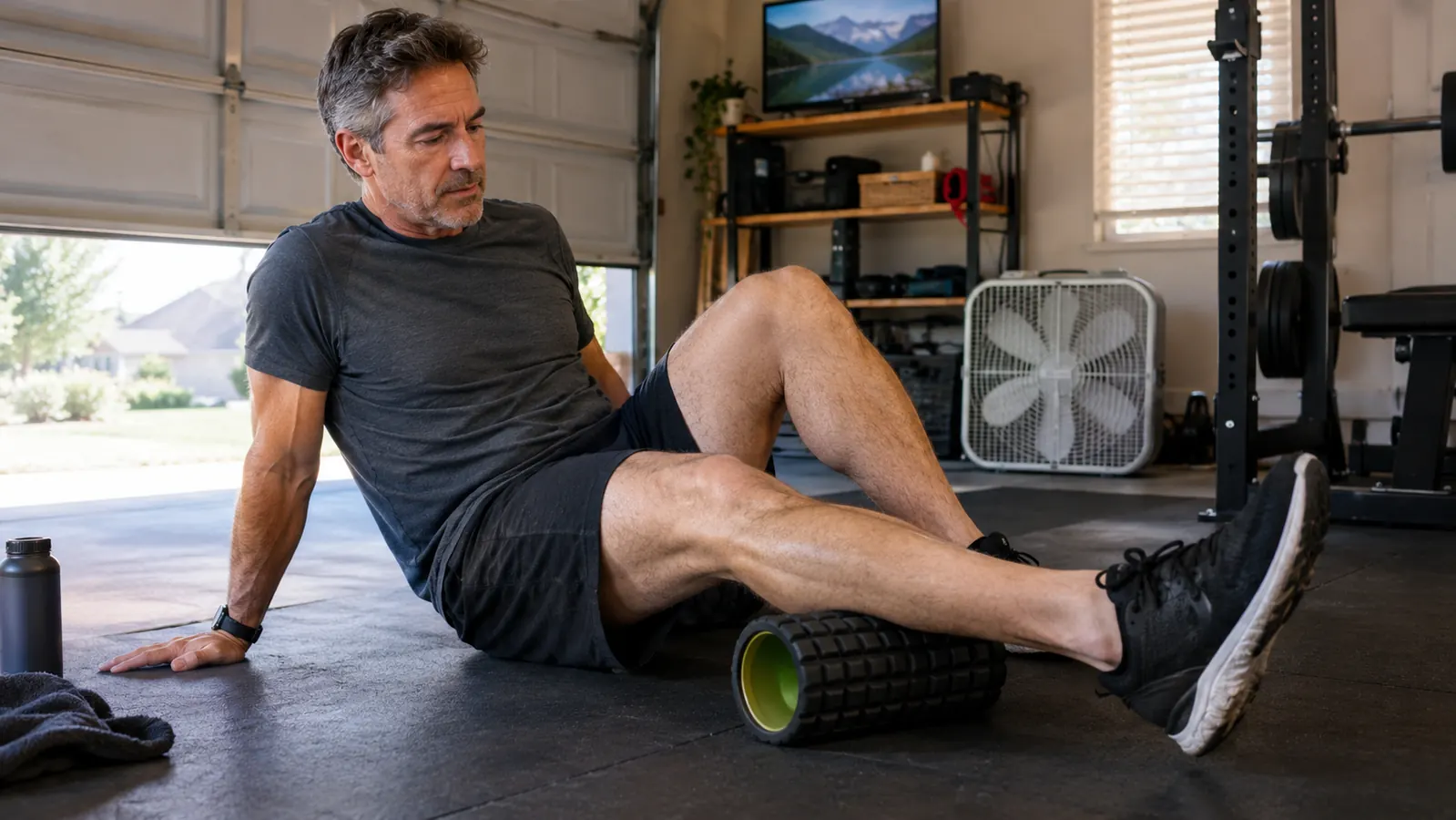
I'll be straight with you: I didn't want to like the TriggerPoint GRID. It costs more than the plain foam rollers I'd used for years, and I figured a fancy surface was mostly marketing. Then my left knee, cranky since my pickup basketball days, reminded me why I needed something better than a soft piece of foam. I've had the GRID for about a year and a half now, and I've spent the last few months using the 321 STRONG foam roller alongside it to see if the cheaper, firmer option was the smarter buy. Here's the honest comparison.
Short answer: the TriggerPoint GRID is the better all-around roller for most people, including me. The 321 STRONG is firmer and costs less, and for a small group of people that extra firmness is exactly what they want. But for daily recovery on calves, quads, hamstrings, and a lower back that's been through two decades of standing on concrete, the GRID gives you pressure without making you dread the session. The 321 STRONG, by comparison, feels like rolling on a piece of pipe. That's not automatically a bad thing. It's just a different tool for a different job.
| TriggerPoint GRID | 321 STRONG | |
|---|---|---|
| Surface feel | Multi-density grid pattern that eases into the muscle | Single-density EPP foam, smooth and unrelenting |
| Material | Multi-density foam, patterned surface over a firm core | Single-density high-density foam, smooth throughout |
| Price | Costs more upfront | Costs less upfront |
| Best for | All-purpose recovery before or after training | Deep pressure on thick muscles like quads and hamstrings |
| Weight and size | 13 inches, easy to pack and store | Longer and lighter than it looks |
| Brand support | Large brand with a long track record | Smaller brand, harder to find in stores |
What Each Roller Is Actually Like
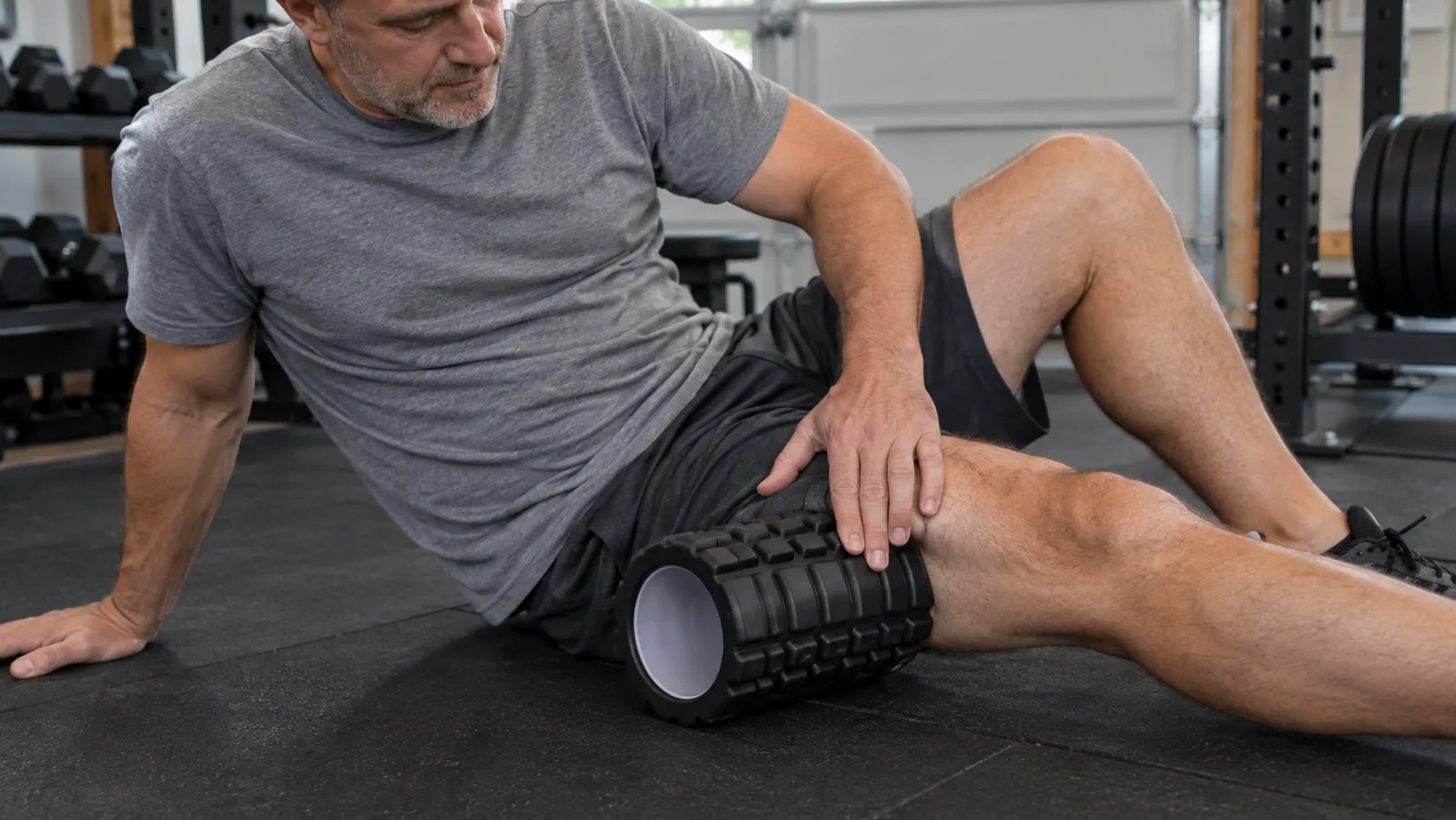
The TriggerPoint GRID is a 13-inch roller with a firm hollow core and a patterned outer surface that uses a grid of ridges and flat zones. It's the kind of roller that feels serious without feeling brutal. When you first press into it, there's a moment of give, then the firm core takes over. That two-stage feel is what makes it work on both a tight calf and a sensitive lower back. It's also short enough to fit across the top of my gym bag, which sounds like a small thing until you've carried a long roller on a plane.
The 321 STRONG is a different animal. It's a longer, straight high-density foam roller with a smooth surface and no give at all. The moment you put weight on it, you're getting the full effect. There's no two-stage feel, no cushion, no negotiation. For a warm muscle after a workout, that's great. For a cold muscle at 5:40 in the morning, it's a decision you have to commit to. I learned that the hard way on a Saturday morning when I rolled my hamstring cold and spent the rest of the day walking like I'd been in a minor car accident. Not an injury, just a warning.
How I Compared Them
My setup is simple: half of a two-car garage with rubber stall mats on the floor, a box fan in the corner, and a small TV on a shelf for the mornings I want a distraction. I train three or four mornings a week before work, usually 30 to 40 minutes, with a longer session on Saturday. Because of the left knee, I favor low-impact work: goblet squats with a dumbbell, split squats, Romanian deadlifts with the bar, and a lot of push and pull work. Foam rolling is the last ten minutes of every session, and I also roll on rest days when my calves feel tight from standing on concrete all day.
To compare the two fairly, I used each roller for a full week at a time, same routine, same muscles, same order. I kept notes on my phone about how each one felt on calves, quads, hamstrings, glutes, and my lower back. I also paid attention to the things that don't show up in a spec sheet: how loud it is on the stall mats, whether it slides around, how easy it is to store, and whether my wife Carmen would actually use it or just let it collect dust. She tried both and her opinion mattered more than mine, because she has zero tolerance for gear that's annoying to use.
I ran the comparison over six weeks. The first week I used the GRID exclusively, the second week the 321 STRONG, and then I alternated week to week to catch any bias. The first time I tried the 321 STRONG, on a Sunday afternoon, I made the mistake of starting on my IT band area. Within ten seconds I was off the roller and on my back, staring at the garage ceiling. It wasn't an injury, just a reminder that this roller does not negotiate. After that I learned to start on the belly of a muscle, warm up the area with a few bodyweight reps first, and ease in slowly.
Where TriggerPoint Wins
The GRID's big advantage is the surface. The grid pattern is designed to mimic the pressure of thumbs or knuckles, and it does a better job of grabbing the muscle instead of just squishing it. On my calves, which are perpetually tight from standing on concrete at work, the GRID finds the knot and works it out without me having to put my full body weight on it. With the 321 STRONG, I have to position myself carefully and brace, because the moment I commit, it's a lot of pressure all at once. There's no easing into it.
It's also more forgiving on bony areas. My lower back is sensitive, and I like to do gentle rolling along the sides of my spine. The GRID's multi-density construction has enough give that I can work that area without wincing. The 321 STRONG on the same spot feels like I'm trying to crack my own vertebrae. And for Carmen, who is newer to foam rolling and has a lower tolerance for discomfort, the GRID is the only one of the two she'll use for more than a minute. That matters more than any spec sheet. If the roller is too painful to use, it doesn't matter how effective it is.
Where 321 STRONG Wins
Here's the thing about the 321 STRONG: it's not a worse roller, it's a different tool. If you want deep, unapologetic pressure on big muscle groups, it does things the GRID can't. My quads and hamstrings are the strongest muscles I have, and sometimes the GRID just isn't enough to get into them. The 321 STRONG's dense foam lets me put real body weight into a quad without the roller flattening out. Last Saturday morning, after a set of split squats that left my left quad barking, the 321 STRONG was the only thing that got deep enough to help. The GRID felt gentle by comparison, and not in a good way.
It also costs less, which matters if you're not sure foam rolling is for you and don't want to spend much to find out. And it's longer, which makes some movements easier. For my upper back, I can position the 321 STRONG horizontally and roll both sides at once without contorting. The GRID's 13-inch length means I have to shift my weight side to side and do twice the work. Because the 321 STRONG has a hollow EPP core, it's surprisingly light, too. I wouldn't call the GRID heavy, but next to the 321 STRONG, it feels denser in the bag.
The roller I reach for most mornings
After a year and a half, the TriggerPoint GRID is the one that actually gets used in my garage. The 13-inch size stores easily, the multi-density surface works on calves and back alike, and it never makes recovery feel like a punishment. If you want one roller that does a little of everything, this is the one I'd start with.
Amazon Check Today's Price on Amazon →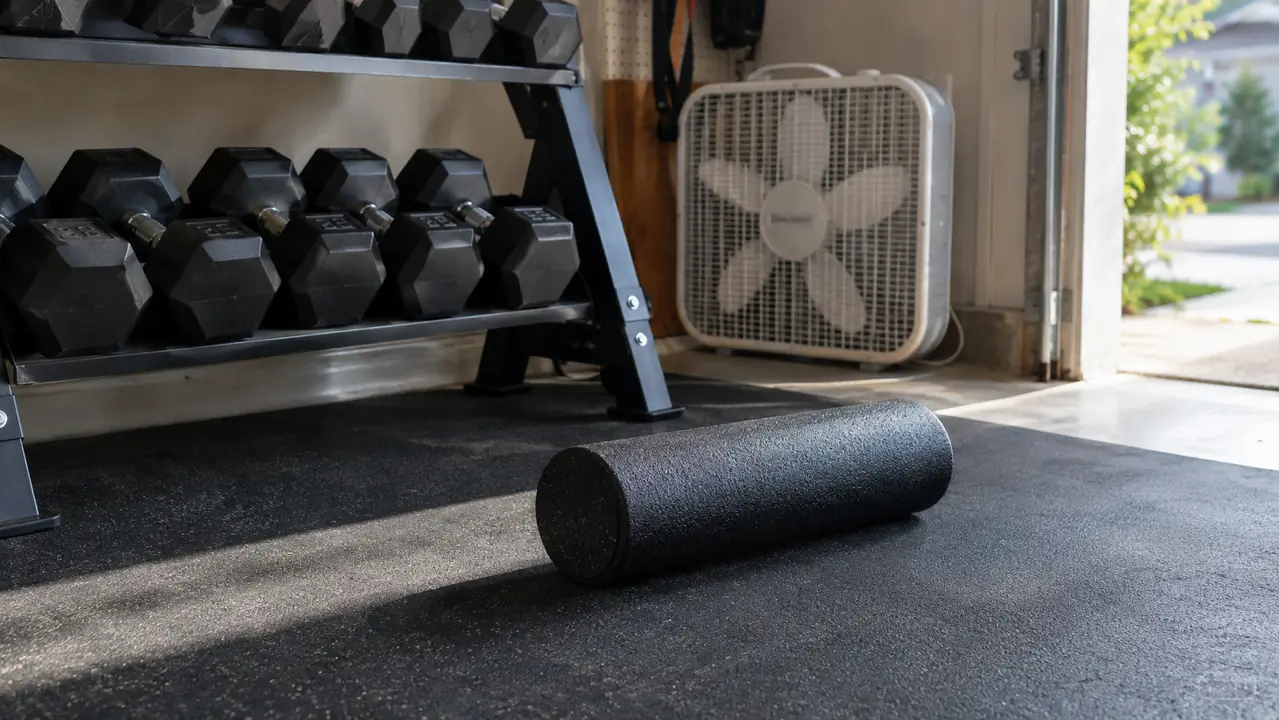
Who Should Buy Which
Buy the TriggerPoint GRID if you want a single roller that handles daily recovery without drama. It's the right choice if you're over 40 like me, if you have any tender spots, if you share the roller with someone who's less enthusiastic about pain, or if you're just starting out and want something you'll actually use instead of something that sits in the garage. Buy the 321 STRONG if you've been rolling for a while, you know you like intense pressure, and you want to keep more of your money. There's a real chance the GRID will feel too gentle to you, and that's a fair reason to pick the other one.
One more thing on fit. If you train at a gym and roll on carpeted floors, the 321 STRONG might feel less punishing because the floor gives a little. On my rubber stall mats, there's no give anywhere, so the firmness of the roller is the only variable. The GRID suits that setup better. If your floors are soft, the 321 STRONG becomes a lot more tolerable, and the price difference starts to look smarter.
What Nobody Tells You About Firm Rollers
The biggest surprise with the 321 STRONG wasn't the pressure. It was how much technique it demands. On a softer roller, you can make mistakes and it barely matters. On a very firm roller, every degree of angle matters. If I'm slightly off, I'm rolling on a bone or a tendon instead of a muscle, and the next day I feel it. I had to watch a couple of videos and slow way down before I got the hang of it. That's not a reason to avoid the 321 STRONG, but it's a reason to know what you're signing up for before you buy.
The other thing nobody mentions: recovery gear only works if it's easy to reach. The GRID lives on a shelf in my garage, right next to the stall mats, and I use it two or three times a week without thinking about it. The 321 STRONG lives in a cabinet because it's too long for that shelf, and I only drag it out when my quads specifically need it. That's not a flaw in the roller. It's just reality. Last Tuesday morning, at about 5:40, I rolled my right calf for two minutes before a shift and it loosened enough to make the first hour on my feet tolerable. I did that with the GRID, because it was right there.
The roller you reach for is the roller that actually helps. After a year and a half, the GRID gets used two or three times a week. The 321 STRONG only comes out when my quads ask for something meaner.
The Pressure Question
A lot of people assume more pressure means a better roller. That's true up to a point. Deep pressure releases tight fascia and gets into muscles that a soft roller can't touch. But past that point, you're just causing your body to guard. I noticed this with the 321 STRONG: if I went too hard, my muscles would tense up against the roller instead of releasing, and I'd get less out of the session than if I'd used the GRID at medium effort. The right pressure is the pressure you can breathe through.
The other part of the pressure question is consistency. A roller that's slightly too gentle but gets used three times a week will beat a roller that's exactly right but too painful to reach for. That's not a knock on the 321 STRONG. It's a real tradeoff. Some people love that kind of firmness and won't feel like they've done anything unless they're wincing. Those people should buy the 321 STRONG and ignore most of what I've said. For the rest of us, the GRID hits the sweet spot between effective and tolerable, and that sweet spot is where habits come from.
Final Thoughts
I kept both rollers, which is the honest answer to which one is better: it depends on the day. The GRID is my daily driver because it works on every muscle I roll and it never makes me dread recovery. The 321 STRONG is the specialist I pull out when I need more pressure than the GRID can deliver, which is maybe once a week. If I could only keep one, it would be the TriggerPoint GRID, without much debate. It's the better first roller, the better all-around roller, and the one I'd buy again. The 321 STRONG is a good second tool. It's just not the one I'd start with.
Still deciding? Start with the GRID.
You can check today's price on the TriggerPoint GRID at Amazon and see if it fits your budget. If it turns out you want more pressure later, the 321 STRONG will still be there. But most people, including me, find the GRID is the one that sticks around.
Amazon Check Today's Price on Amazon →