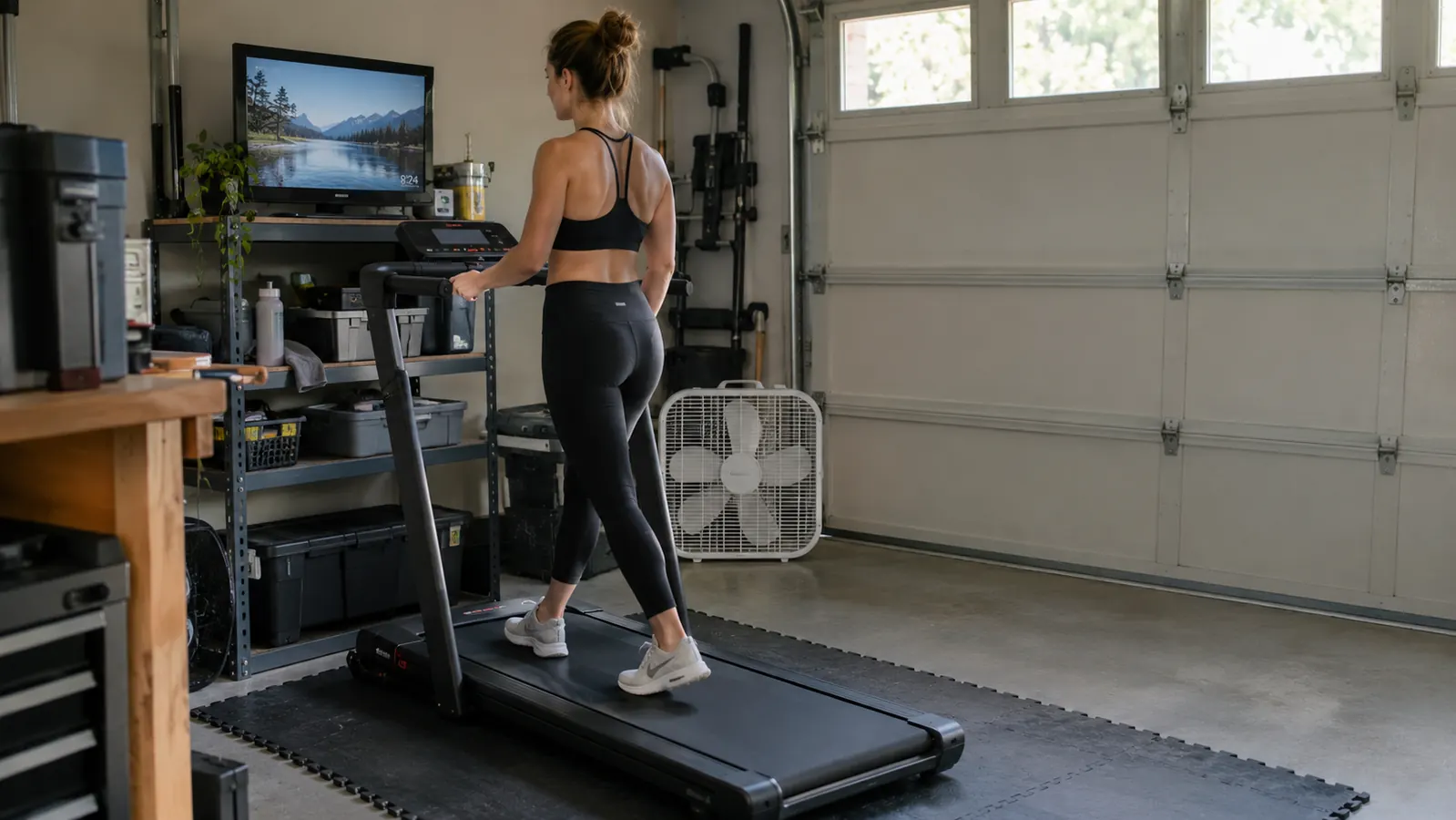
I bought the Viamotion walking pad for the same reason most people do: I was not walking enough, and I was not going to start walking enough if it meant driving to a gym. I work in logistics, my left knee has been cranky since years of pickup basketball, and my training time is a narrow window before work. The Viamotion sits in one half of my two-car garage on rubber stall mats, next to a box fan and a small TV on a shelf. I have used it three or four mornings a week for about six months. This is the honest version of that experience, including the parts the product page does not mention.
The Quick Verdict
A genuinely useful walking pad for steady low-impact miles at home, with a few real annoyances: the handle bar is fixed, the app is optional, and the belt needs a little attention. If you want a simple way to walk while watching something, it earns its place.
Amazon Check Today's Price →A walking pad that actually fits into a normal week
If you have been going back and forth on whether a walking pad is worth the floor space, the Viamotion is a solid place to land. It folds, it rolls, and it does one thing well: it lets you walk at home without thinking about it.
Amazon Check Today's Price on Amazon →How I Have Used It
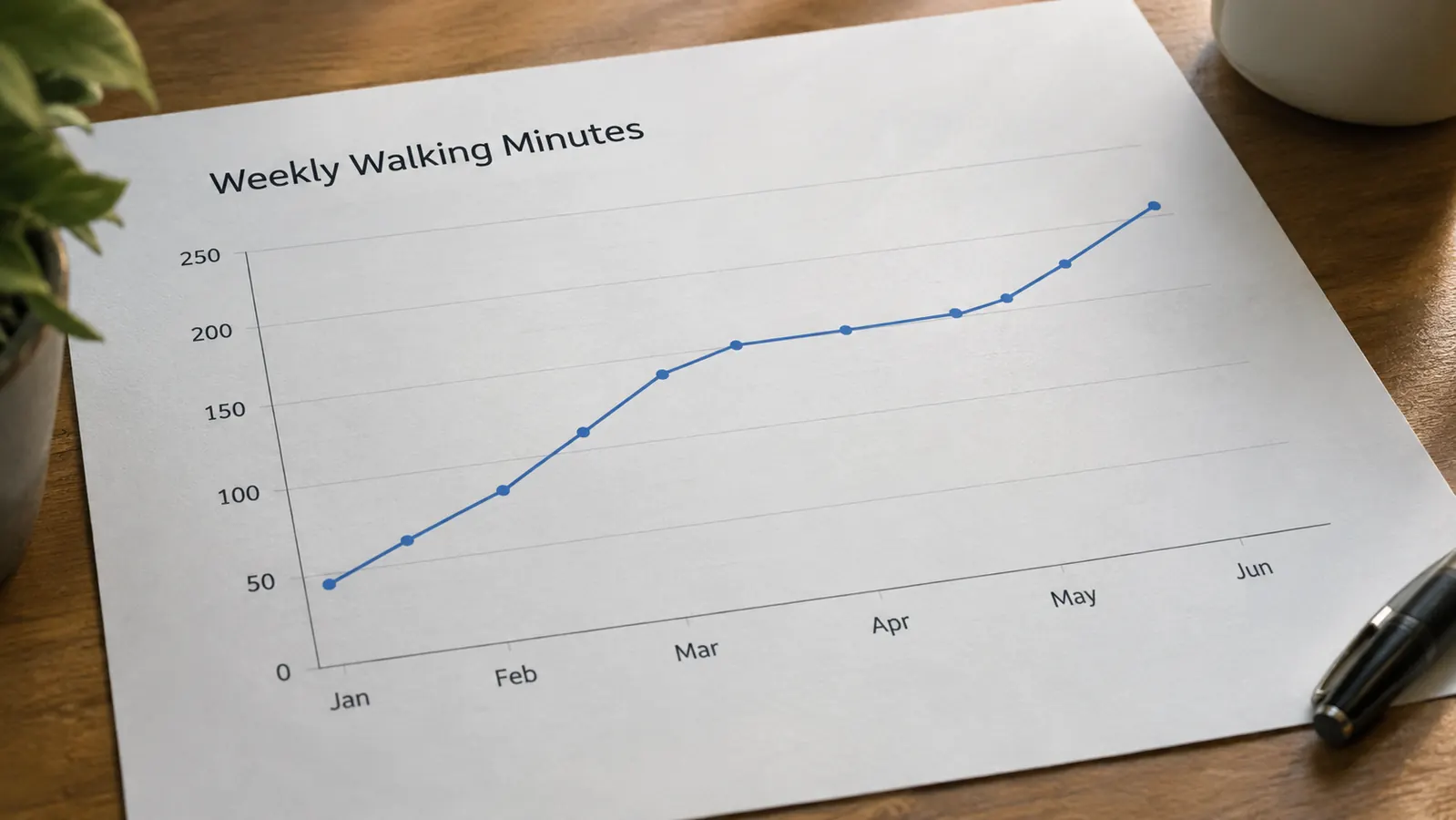
My routine is boring on purpose. Three or four mornings a week, I get up, make coffee, and walk for 30 to 40 minutes while I watch something on the small TV. Saturday mornings I go longer, sometimes a full hour. I tried walking after dinner at first, and that lasted about a week. By the time the dishes were done and the news was on, I had already talked myself out of it. Moving the walk to the morning is what made it stick. The Viamotion has a handle bar, which I did not think I needed until I used it. I grip it lightly when I am warming up, and I use it to steady myself when I reach for my water bottle. It is not a treadmill you run on. It is a walking pad, and it is best when you treat it like one.
The belt is wide enough for a natural stride, and the deck is long enough that I do not feel like I am stepping off the back. I am 51 and I walk at a brisk pace, not a race pace. On a typical morning I set the speed around 3 miles per hour, and the motor handles it without complaint. The display shows speed, time, distance, and steps, and I check it about as often as I check the clock, which is to say not much. The incline is a small adjustment, and I use it more than I expected. A slight incline turns a flat walk into something that feels like actual work without making my knee angry.
The noise level is the first thing I noticed. It is not silent. No walking pad is. But it is quiet enough that I can watch TV at a normal volume and hear the dialogue. I keep the volume at 14 on the TV, which is the same level I use for the evening news. With a full treadmill in the same spot, I would have to turn it up. That matters more to me than any spec on the box, because the whole point is that I actually use the thing.
What Nobody Tells You Before You Buy
The product page makes the Viamotion look like it appears in your garage, unfolds itself, and starts walking you. The reality is a little more involved. The unit arrives heavy, and the box is bigger than you expect. I managed to get it out of the box and into place by myself, but I would not want to do it on a second floor, and I would not want to do it at the end of a long workday. It took me about forty-five minutes from opening the box to taking my first steps, and most of that was unfolding, checking the manual, and figuring out which pin went where. Budget an hour, not ten minutes, especially if you are careful about reading the manual.
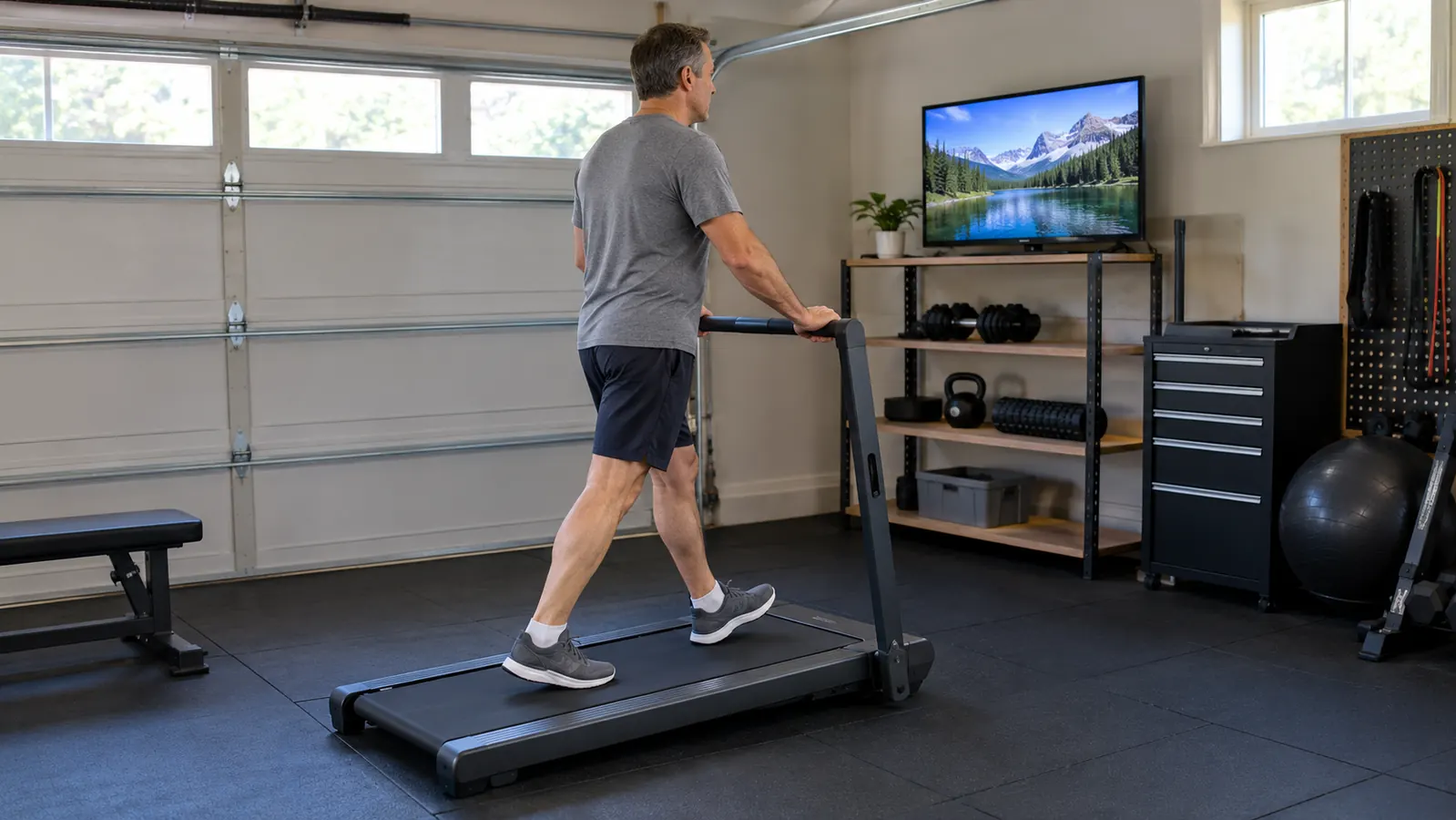
The handle bar is fixed. I assumed it would adjust, because most things with a handle bar adjust. This one does not. I am 5'10" and it is fine for me. If you are significantly taller or shorter, you may find yourself reaching or stooping. It is not a dealbreaker, but it is the kind of detail you only learn after it is in your house. If you are over 6 feet, I would measure the bar height before you order. That is one measurement that is hard to undo after the box is open.
The app exists. I will be honest: I used it twice and then stopped. The walking pad works perfectly well without it. The display on the unit shows speed, time, distance, and steps, and that is all I actually need. The remote is small, about the size of a car key fob, and it took me a while to realize it has a clip on the back. Once I clipped it to my shirt pocket, I stopped hunting for it. If you are the kind of person who loves data and streaks and monthly summaries, the app may be a selling point. For me, it is a thing I installed and then ignored.
The real test of a walking pad is not how it looks in the listing. It is whether you still use it in month four. I do.
The Belt and the Maintenance Nobody Mentions
Here is the part I did not read in any review before I bought it: the belt needs attention. Walking pads are not set-and-forget appliances. The belt can drift to one side, and when it does, the walk feels wrong and the motor works harder. The first time it happened, around week nine, I thought something was wrong with the deck. I spent a whole walk feeling the edge of the belt rub against the frame. The manual shows you how to adjust it with a hex key, and the hex key comes in the box. I have done it twice in six months. It takes about ten minutes each time, and you do it while the machine is off. It is not hard, but it is a thing you should know before you buy.
The deck also needs to be kept reasonably clean. I walk in the garage, and garage dust finds its way onto the belt. I wipe it down every couple of weeks with a damp cloth, and I make sure the area under the unit stays swept. I tried skipping the wipe-down once, after a weekend of yard work, and the belt picked up enough grit that I could hear it with every step. Twenty minutes with a cloth and the noise was gone. This is not a complaint about the Viamotion specifically. It is true of every walking pad I have looked at. But nobody puts it on the box, and it is the difference between a machine that lasts and a machine that gets loud and wobbly.
The Viamotion has a lubrication schedule in the manual. I will admit I did not follow it perfectly at first. Around month three, the belt started to feel grabby, like it was catching instead of gliding. I checked the manual, found the little bottle of lube that comes with the unit, and followed the steps. Fifteen minutes later the belt felt new. That is the kind of maintenance that takes a few minutes and prevents a much bigger headache later. I set a reminder on my phone for every three months now, which sounds ridiculous until you have felt a dry belt grab on a cold morning.
What It Is Like to Live With
The footprint is the reason I bought this instead of a full treadmill. The Viamotion folds up and rolls, and when it is folded, it leans against the garage wall and takes up almost no space. My garage is not a showroom. It has a workbench, shelves, a cooler, and a pile of things I keep meaning to sort. The walking pad needed to fit into that, and it does.
When it is unfolded, it takes up a rectangle of floor that I have learned to plan around. I leave it out most of the time because I use it so often. If I were the kind of person who walked once a week, I would fold it after every use, and that would probably mean I used it even less. The fact that it stays out is a small thing that makes a big difference.
My wife Carmen has used it a few times on weekend mornings. She is shorter than I am, and the fixed handle bar is less of an issue for her than I expected. She walks without holding it most of the time. Her only comment was that the belt feels firmer than the gym treadmills she is used to, which I took as a compliment. She has not asked me to move it out of the way since, and that is the quiet endorsement that matters.
The Incline: More Useful Than I Expected
I bought the Viamotion for flat walking. The incline was a feature I assumed I would never touch. I was wrong. A 1 or 2 percent incline turns a casual walk into something that gets my heart rate up without making my knee complain. The first time I tried it, one Saturday morning in January, I set it to the lowest setting and walked for forty minutes. My knee felt fine, and I was sweating more than I do on a flat walk of the same length. I use it on most walks now, and I notice the difference on the days I skip it.
The incline adjustment is not a button on the handle bar. It is a manual adjustment, which means you get off the pad, move a pin or a lever, and get back on. That sounds annoying, and it is, a little. I set it at the start of my walk and leave it, so the inconvenience is one interruption per session. What nobody tells you is that the manual adjustment also means the incline has a few fixed settings, not a smooth range. I have found two that I use, and I do not miss the ones in between. For what this costs, I would rather have a manual incline that works than a motorized one that adds weight and cost.
One honest note: the incline is not steep. It is enough to change the feel of the walk, not enough to simulate a hill. On the highest setting, I can feel it in my calves and the back of my legs, which is exactly what I wanted when I bought the machine. But if you are looking for a serious gradient, this is not the machine for you. If you are looking for a way to make a flat walk slightly harder, it is exactly right.
What I Liked
- Folds flat and rolls against the wall, so it earns its floor space back
- Quiet enough to watch TV at a normal volume while walking
- Handle bar adds confidence during warm-ups and when reaching for a water bottle
- Manual incline turns a flat walk into real low-impact work
Where It Falls Short
- Handle bar is fixed, so taller and shorter users should check the height first
- Belt drifts and needs a hex key adjustment every few months
- The app adds little for someone who just wants to walk
- Heavy box to haul into place, not a one-person job on stairs
Who This Is For
The Viamotion walking pad is for people who already know they want to walk more and need the friction removed. It is for the person who does not want to drive to a gym, does not want to wait for a treadmill, and does not want to explain to a neighbor why they are walking in the garage. It is for the person who will actually use a machine that is already set up and ready.
It is also for people with a cranky knee. I am careful with my left knee, and walking on the Viamotion has never aggravated it. The deck has a little give, the pace is self-selected, and there is no impact to speak of. My knee actually feels better on the mornings I walk than on the mornings I skip it. That is not a medical claim. It is just my experience.
Who Should Skip It
If you want to run, this is not the machine. It is a walking pad, and it is built for walking speeds. Pushing it past that is not what it is for, and I would not recommend it. If you want a full treadmill with a big screen, programmed workouts, and a heart rate monitor, the Viamotion will feel basic. It does not try to be a smart gym. It tries to be a walking surface, and it succeeds.
If you are tall, check the handle bar height before you buy. The fixed handle bar is my main physical complaint. And if you are the kind of person who buys fitness equipment and lets it become a clothes rack, be honest with yourself. No walking pad fixes that. The Viamotion is a tool. It only works if you use it.
The Bottom Line
The Viamotion walking pad is not a cure-all. It is a well-made walking surface that fits in a garage, folds up, and gets used. It has a fixed handle bar, a manual incline, and a belt that needs occasional attention. None of those are dealbreakers. They are just the truth about living with the machine.
I have had mine for six months. I still use it three or four mornings a week. That is the review that matters. If you are looking for a way to walk more at home without a big footprint, the Viamotion is worth your money. Just know what you are getting: a simple, honest walking pad, not an automatic fix.
The walking pad I still use in month six
If you are ready to stop thinking about walking more and start doing it, the Viamotion is a practical, low-fuss way to make it happen. It folds, it rolls, and it has earned its spot in my garage.
Amazon Check Today's Price on Amazon →