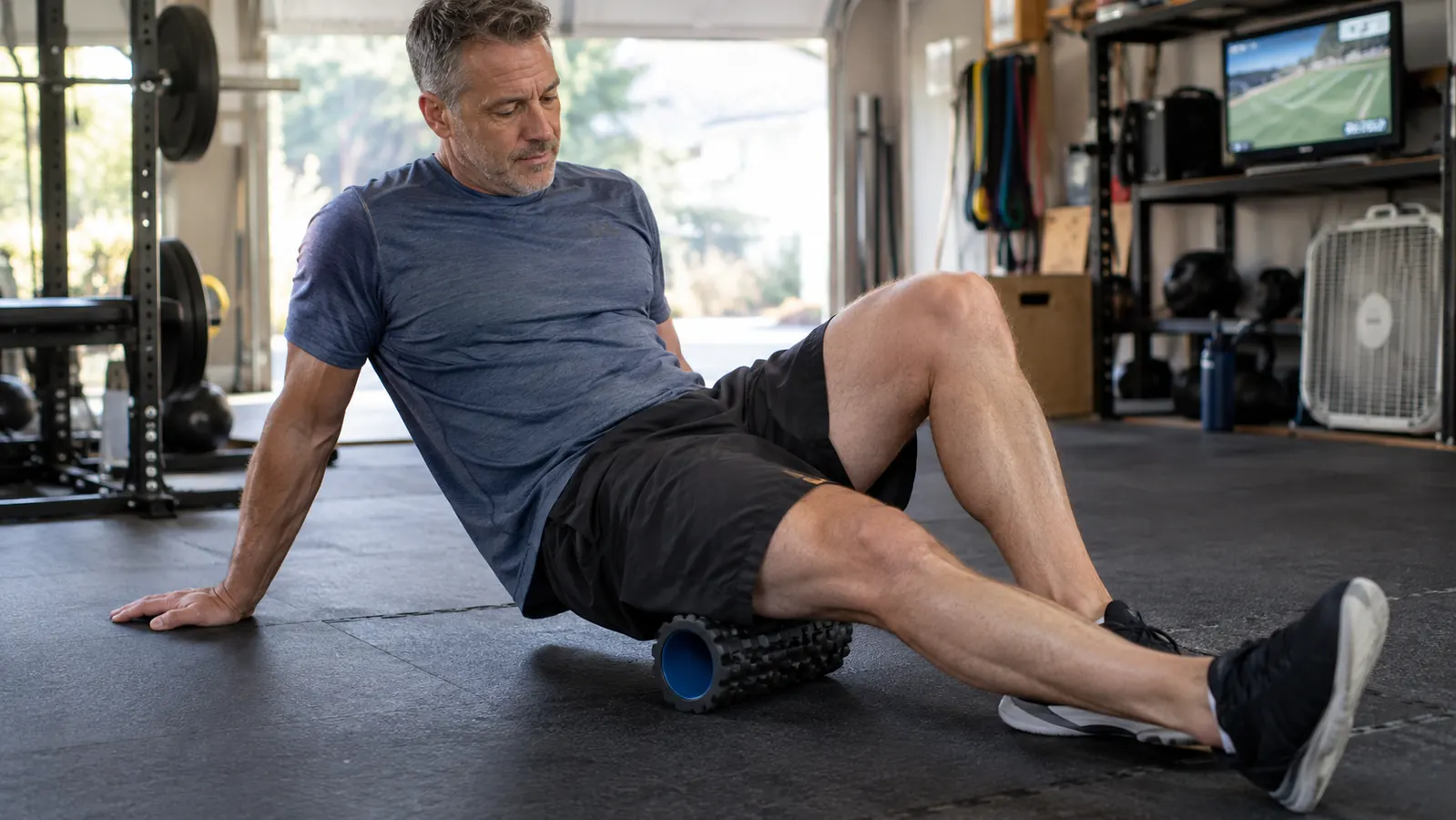
The day after a hard leg day, I used to walk down the stairs like I was testing each step for landmines. I am 51, I train in one half of a two-car garage, and I have a left knee that has been cranky since my pickup basketball days. So when I say I have spent a fair amount of time thinking about post-workout soreness, I mean I have spent a fair amount of time sitting on the floor of my garage, wincing, and wondering if there was a better way. There is. It is a foam roller, and the one that has earned a permanent spot in my garage is the TriggerPoint GRID 1.0.
This is not a promise that you will never be sore again. Soreness is part of training, especially when you are over 40 and you decided to add a few more sets than usual. What a foam roller does is make the day after a workout a lot more manageable. It takes the edge off tight legs, gets blood moving through tired muscles, and turns that stiff, shuffling walk to the coffee maker into something closer to a normal stride. Here is how I use mine, step by step, in the order that actually works.
The roller I keep in my garage: the TriggerPoint GRID 1.0
It is firm enough to actually do something, long enough to reach your back without contorting, and it has held up to years of morning use in a garage that gets hot in the summer. If you are going to buy one roller, this is the one I would buy.
Amazon Check Today's Price on Amazon →Step 1: Roll the calves first, before anything else
I used to start with my quads because that is where the soreness was loudest. That was a mistake. Tight calves pull on everything above them, and if you skip them, the rest of the roll feels like you are fighting your own legs. So now I start seated on the garage mat, both hands behind me, and I place one calf over the TriggerPoint GRID 1.0. I cross the other leg over the top for a little extra pressure, and I roll slowly from just above the ankle to just below the knee.
The GRID 1.0 has a multi-density surface, which sounds like marketing language until you feel it. The firm zones get into the meat of the calf, and the softer zones let you roll over the back of the knee without that sharp, bone-on-roller feeling. I do about 10 passes on each leg, pausing for a few seconds on any spot that feels especially tight. It is not comfortable. It should not be comfortable. But it should not be agony either. If you are seeing stars, ease up. Last Tuesday, after a set of split squats I had no business adding to an already hard leg day, my right calf was tight enough that I could feel it with every step across the garage. I gave that one spot an extra two minutes, just above the middle of the calf, and by the time I stood up the difference was obvious. That is the day I stopped treating calves as optional.
One practical note: do this before you stand up for the day, or at least before you do anything else in your workout. Your calves are cold and stiff in the morning, and a few minutes on the roller is the difference between a normal first cup of coffee and that slow, careful shuffle I mentioned. I keep the TriggerPoint roller on the floor next to my stall mats so there is no excuse to skip it.
Step 2: Hit the quads with your body weight, not your hands
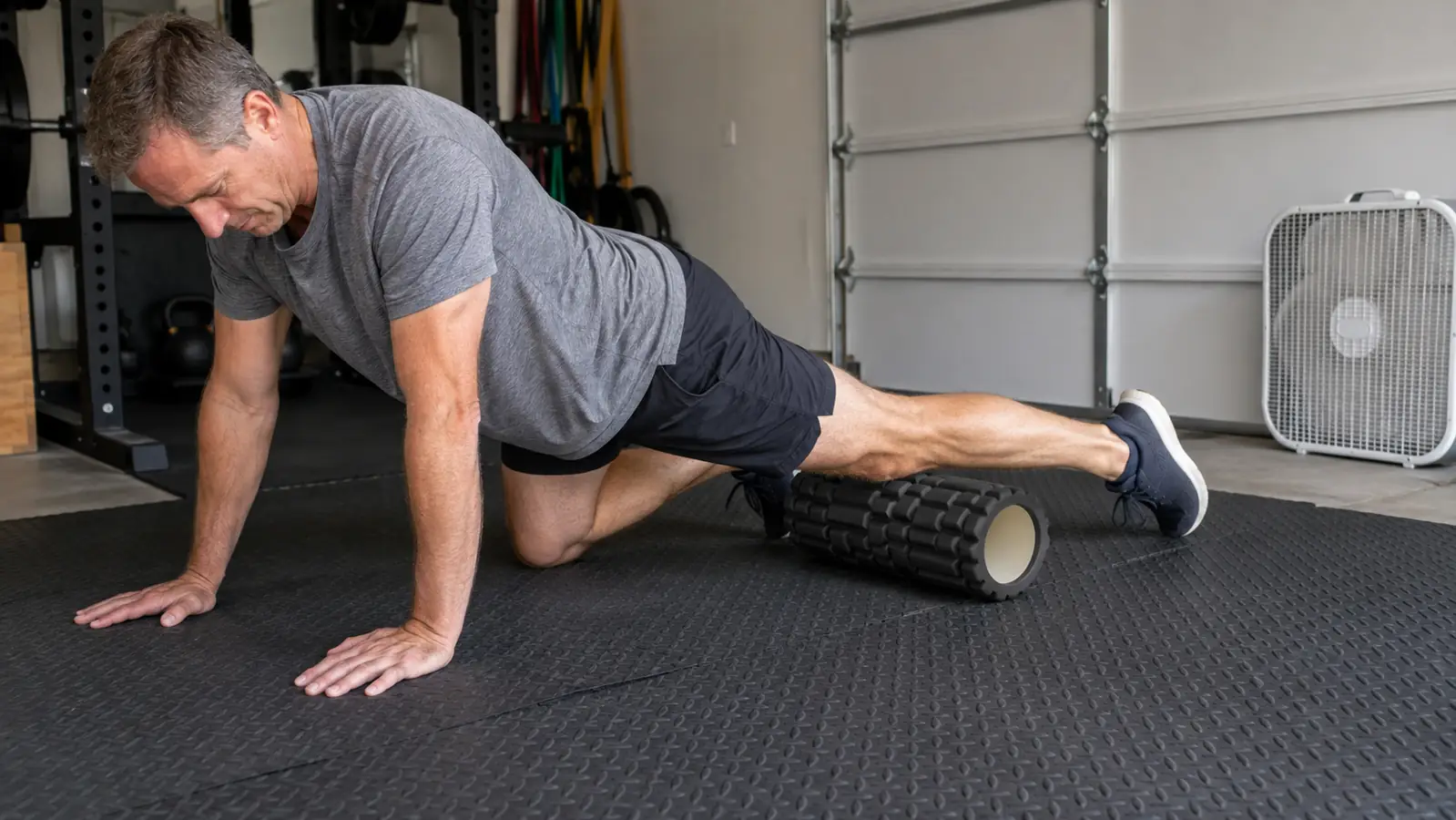
Quads are the muscle group most people roll wrong. They put the roller under one leg, prop themselves up on their hands, and then barely put any weight on it. That does nothing. The whole point is to use your body weight to press the muscle into the roller. So I get into a forearm plank position, with the GRID 1.0 under one thigh, and I let my body weight do the work. Before I bought the GRID, I used a soft foam roller from a big box store, and it was like rolling over a pool noodle. It did nothing. The firm surface on this one is what finally got into the outer quad. I know because I timed it one Sunday: two minutes on the GRID loosened my leg more than ten minutes on the soft one ever did, and the soft one is now holding up a tarp in the corner of the garage.
I roll from the top of the thigh down to just above the knee, slowly, and I stop on the tight spots. For me, the tight spot is always the outer quad, the vastus lateralis, which is the muscle that gets grumpy after squats and lunges. I will spend an extra 20 or 30 seconds there, just rocking back and forth over the firmest part of the roller. It is not a race. Ten slow passes beats thirty fast ones every time.
If you have a cranky knee like mine, keep the roller away from the kneecap itself. Roll the muscle, not the joint. And if the full plank position is too much on your wrists, you can do one leg at a time with the other knee on the floor. The TriggerPoint GRID 1.0 is 13 inches long, which is short enough to control with one leg, but long enough that it does not dig into the floor awkwardly when you shift your weight.
Step 3: Open up the hips and the glutes
Hips are where a lot of back pain actually starts, and glutes are the biggest muscle group most people never roll. I sit on the roller sideways, with the GRID 1.0 under one glute, and I lean back onto one hand. Then I roll in small circles, working from the hip bone back toward the center. It feels ridiculous the first time you do it. It also feels like someone is finally getting at a knot that has been there since Tuesday.
The key here is to go slow and to breathe. If you hold your breath, the muscle stays tight and you are basically rolling a clenched fist. I take slow breaths and try to relax into the roller, letting the pressure sink in. I do about a minute per side. When I am done, I can usually feel the difference immediately when I stand up. My lower back feels less like a board and more like a back. The first time Carmen walked past the garage door while I was doing this, she asked if I was okay. It does look strange. But she has borrowed the roller herself after her Saturday morning walks ever since, so I figure it passed the test. I do this step right after the quads, because the glutes are what tie the legs to the lower back, and rolling them in that order makes the back roll in Step 4 easier.
This is also the step that helps the most with that general post-workout stiffness that makes you feel 20 years older than you are. It is not a fix for a real injury. If something actually hurts, sharp and specific, go see a professional. But for the dull, achy, I-squatted-yesterday soreness, this step is the one I would not skip.
Step 4: Roll the back, but do it right
The back is where most people give up on foam rolling, because they lie on the roller and roll up and down over their spine. That is not what you want. The spine is bone. You want the muscles on either side of it. So I lie on the floor with the GRID 1.0 under my upper back, positioned just below the shoulder blades, and I cross my arms over my chest. Then I roll side to side, working the muscles beside the spine, not the spine itself.
I keep my hips off the floor and my core engaged, and I roll from the middle of my back up toward the shoulders. When I hit a tight spot, I stop and let my body weight sink into it for a few seconds. The TriggerPoint GRID 1.0 is firm enough that I can feel it working through a t-shirt, which matters in a garage that is 90 degrees by mid-June. By late July, the garage reads about 95 degrees by six in the evening, and the box fan only does so much. I learned to do the back roll in the morning before work, when the concrete is still cool. The roller itself sits on the floor and holds the heat, so I give it a minute after I pick it up. The pressure does not change. I just sweat a little more and take it slower.
A note on the neck: do not roll your neck with a foam roller. Ever. The neck is not built for that kind of pressure. If your neck is tight, use your hand or a lacrosse ball against a wall, or just skip it. The back roll is for the big muscles, and the big muscles are where the post-workout soreness actually lives.
Step 5: Finish with the forearms and a few minutes of easy movement
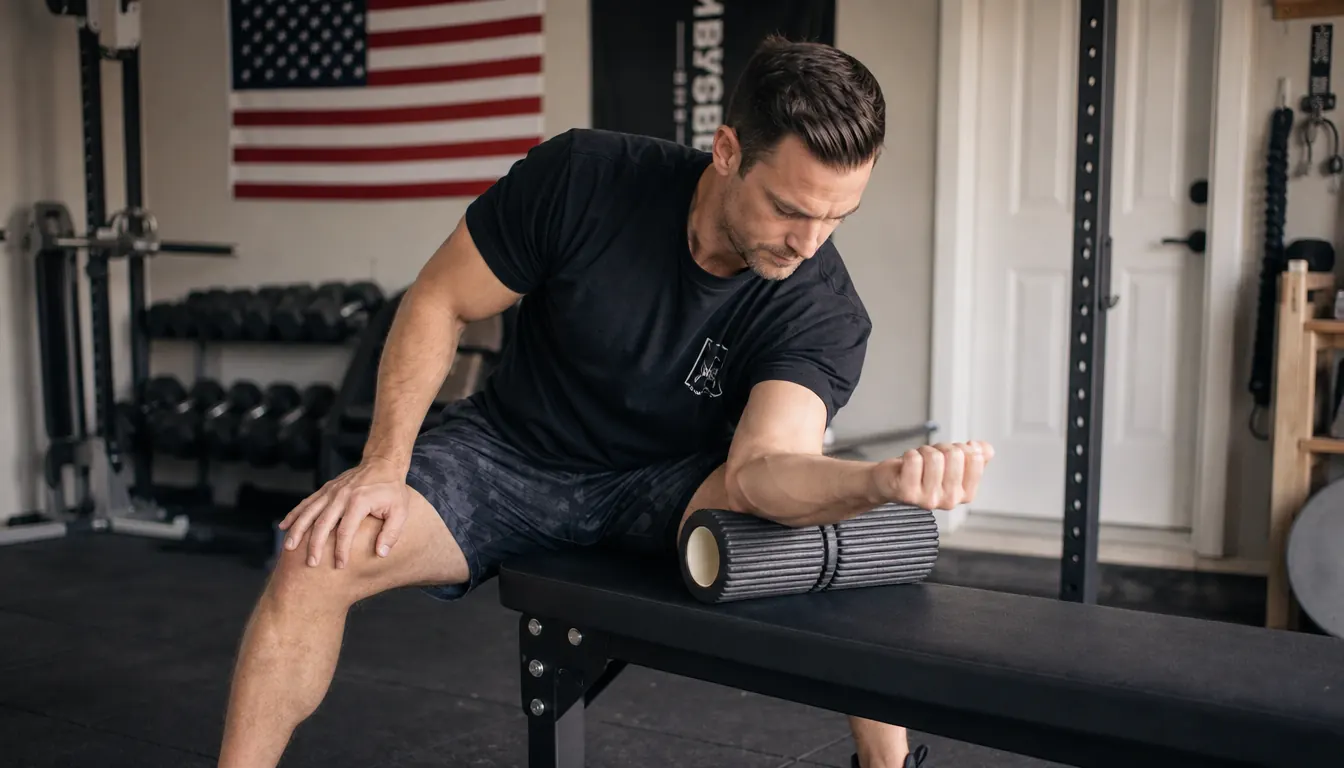
Forearms are the step everyone forgets, and they are the reason your arms feel like noodles the day after a heavy push day. I stand next to my bench, place the GRID 1.0 on the bench, and lean my forearm over it. Then I roll from the elbow to the wrist, slowly, with my other hand pressing down for extra pressure. It takes about 30 seconds per arm, and it makes a real difference in how my grip feels the next day.
When the rolling is done, I do not just stand up and walk away. I spend a few minutes moving around the garage, doing some easy leg swings and a few bodyweight squats, just to let the muscles know they are allowed to move again. This is the part that turns a good roll into a great one. The roller loosens things up, and the movement reminds your body how to use the full range.
The whole routine takes me about 12 to 15 minutes. That is less time than I used to spend sitting on the floor wondering why I was so stiff. And because the TriggerPoint GRID 1.0 lives on the garage floor, I do not have to dig it out of a closet or remember where I put it. It is just there, next to the mat, waiting.
What Else Helps
Foam rolling is the piece of the puzzle I reach for most, but it is not the only piece. I drink a lot of water on training days, I try to get a decent night of sleep, and I take a short walk on my rest days even when I do not feel like it. I also learned the hard way that a warm-up matters more than any post-workout routine. Five minutes of easy movement before you train, like jumping jacks or a brisk walk around the block, means less soreness afterward. And if a muscle is genuinely injured, not just sore, no roller in the world is the right answer. See a doctor or a physical therapist. The roller is for the day-after stiffness, not for damage.
The whole routine takes me about 12 to 15 minutes. That is less time than I used to spend sitting on the floor wondering why I was so stiff.
Start with the roller that actually gets used
The best foam roller is the one that stays out on the floor, and the TriggerPoint GRID 1.0 is the one that has stayed in my garage for years. Firm enough to work, short enough to control, and built to take a beating.
Amazon Check Today's Price on Amazon →